
Sequels Fluffy Favourites : How One Slot Became a Long-Running Series
Why Fluffy Favourites Sequels Are Often Misunderstood
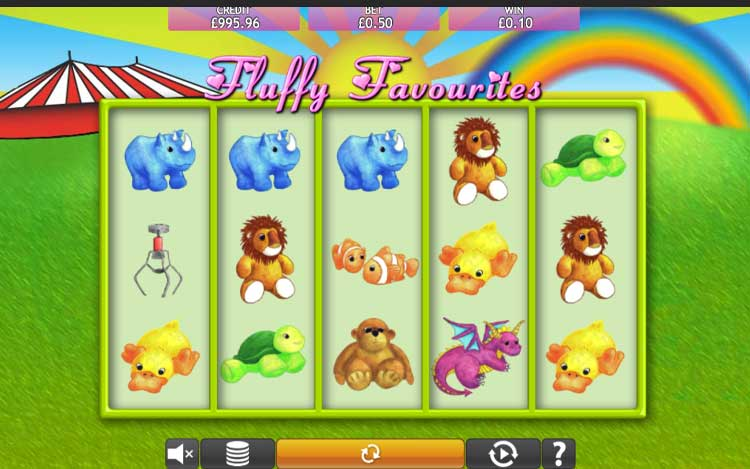
I have spent enough time observing slot design trends to know that the word sequel carries far more weight than it deserves. In most areas of digital entertainment, a sequel implies progression: new systems, higher ambition, mechanical evolution. In the Fluffy Favourites series, however, the term functions very differently. What players commonly interpret as a continuation is, in practice, something closer to repetition by design.
When people search for Fluffy Favourites sequels, they are rarely looking for a technical breakdown. More often, they are chasing a feeling they already know. A sense of familiarity. A slot that behaves in a predictable way, looks friendly on the surface, and does not demand cognitive effort to understand. The popularity of this series has never been about innovation. It has been about comfort, repetition, and controlled familiarity.
This distinction matters, because many misunderstandings around the series stem from false expectations. Players approach each new Fluffy Favourites variant as though it represents a meaningful step forward, only to discover that very little has changed beneath the surface. This is not a flaw. It is the point.
The Fluffy Favourites sequels exist to preserve a specific experience rather than reinvent it. They are built around the idea that players do not always want novelty. Quite often, they want reassurance. They want to sit down with a game that behaves the way they expect it to behave, responds to inputs in a familiar rhythm, and delivers outcomes within a known emotional range.
This page is not written to rank those sequels, nor to suggest which one is better. That approach misunderstands how this series works. Instead, the aim here is to explain why these games feel so similar, how that similarity is constructed, and why the concept of sequels is largely a cosmetic framework rather than a mechanical one.
Understanding Fluffy Favourites as a series means shifting perspective. Instead of asking which version pays more, or which one is newer, it is more useful to ask why so many versions exist at all. The answer lies in design philosophy, player psychology, and a deliberate decision to prioritise consistency over experimentation.
Once that framework is clear, the individual sequels begin to make sense. Not as separate titles competing with one another, but as variations of a single idea, presented in slightly different visual languages for slightly different moods. The rest of this analysis builds from that premise.
The Core DNA of Fluffy Favourites: One Engine, Many Faces
The non-negotiables that define the series
Across the sequels, the theme changes, but the underlying build stays consistent. This snapshot shows what remains stable, so you can read any version through the same lens.
| Element | Behaviour |
|---|---|
| Grid layout | Fixed 5×3 |
| Paylines | Fixed |
| Volatility | Medium–High |
| Symbol logic | Static, no modifiers |
| Bonus structure | Repeating free spins loop |
At the heart of every Fluffy Favourites sequel sits the same structural foundation. The grid does not change in any meaningful way. The symbol hierarchy remains familiar. The overall volatility profile stays within a narrow band. This is not accidental, nor is it the result of creative stagnation. It is a deliberate design choice aimed at maintaining behavioural consistency.
From a technical standpoint, the series relies on a single template. Five reels, three rows, fixed paylines, and a symbol set designed to be instantly readable even at low levels of player attention. There is no mechanical learning curve to overcome. Anyone who has played one entry in the series can sit down with another and understand it almost immediately.
Volatility is one of the most important shared traits. Despite visual softness and playful themes, these games are not designed for constant micro-wins. Instead, they balance relatively dry base play with the promise of extended bonus sequences. This creates a rhythm where anticipation builds gradually rather than peaking frequently. The result is a session that feels longer than it actually is, with fewer sharp emotional spikes.
RTP variation across the series is often cited as evidence that the sequels differ meaningfully from one another. In reality, these differences are marginal and frequently dependent on external configuration rather than core design. From a player’s perspective, the practical experience remains largely unchanged. The slot still behaves like a Fluffy Favourites slot, regardless of the number printed in the information panel.
Symbol design plays a subtle but important role in reinforcing this identity. The animals, while visually distinct, are functionally interchangeable. They do not introduce new mechanics or strategic considerations. Instead, they act as visual anchors, helping players recognise the game instantly while avoiding any sense of threat or complexity. This is deliberate simplification, not laziness.
Another defining aspect of the series is its resistance to mechanical clutter. There are no expanding systems layered on top of one another, no cascading modifiers, no persistent progression features. Each spin is isolated. Each bonus resolves fully before returning the player to the base game. This containment keeps cognitive load low and prevents the experience from drifting into overstimulation.
What ties all of this together is the series’ relationship with player behaviour. Fluffy Favourites slots are designed to be returned to, not mastered. They do not reward deep analysis or optimisation. Instead, they reward familiarity. Over time, players stop consciously evaluating outcomes and begin to play on instinct. That is where the series becomes most effective.
Understanding this core DNA is essential before examining the sequels individually. Without it, differences appear larger than they are. With it, the series reveals itself as a controlled environment, where variation exists primarily to refresh the surface while leaving the underlying experience intact.
In the sections that follow, this foundation will serve as the reference point. Every sequel, regardless of theme or presentation, ultimately circles back to this same structure. Once that is recognised, the Fluffy Favourites series stops being a collection of separate games and starts to look like what it truly is: a single design philosophy expressed repeatedly, with intention.
The Bonus Engine: Why Every Fluffy Favourites Sequel Feels Familiar
If the visual layer is what draws players into a Fluffy Favourites sequel, the bonus engine is what keeps them there. This is where the series reveals its true priorities. Rather than chasing novelty, the design focuses on repetition, duration, and emotional pacing. Every sequel inherits the same underlying bonus logic, and it is this consistency that defines the experience more than any theme ever could.
The free spins feature sits at the centre of the series. It is not designed to surprise, but to extend. The structure encourages long bonus rounds, reinforced by multipliers and re-trigger potential rather than sudden bursts of value. This creates a sense of continuity. Once a bonus begins, the player is conditioned to expect that it may last longer than initially promised, even if individual wins remain modest.
This approach changes how players perceive value. Instead of focusing on single outcomes, attention shifts to the process itself. The bonus becomes an event rather than a moment. Time spent inside it feels meaningful, regardless of the final balance change. That perception is critical to understanding why the series sustains engagement without relying on dramatic win spikes.
Alongside free spins, secondary bonus mechanics appear across the sequels in various visual forms. Pick-and-win features, claw-style selections, or themed mini-games all serve the same purpose: providing a short, contained interruption to base play. These mechanics deliver immediate feedback and clear resolution. They are not intended to redefine the session, but to punctuate it.
The contrast between these two bonus types is deliberate. Free spins stretch time. Pickers compress it. One encourages patience, the other delivers instant closure. Together, they form a balanced cycle that keeps the experience from feeling monotonous while avoiding excessive volatility.
What is most notable is what the engine does not do. There are no layered bonus states that bleed into one another. No persistent modifiers that alter future spins. No evolving systems that demand tracking or optimisation. Each bonus begins cleanly and ends cleanly. The game always resets to a familiar baseline.
This design choice reduces friction. Players never feel lost or overwhelmed, even during extended sessions. The engine supports habitual play rather than strategic engagement. Over time, this predictability becomes reassuring. Players know exactly what kind of experience awaits them, regardless of which sequel they choose.
By preserving the same bonus architecture across all sequels, the series ensures that familiarity outweighs curiosity. The player is not learning a new system, but revisiting a known one. This is the core reason why Fluffy Favourites sequels feel interchangeable to experienced players. The differences exist, but they do not alter the rhythm of play.
Understanding this bonus engine is essential, because it explains why visual changes alone are sufficient to justify new entries. When the mechanical heart remains unchanged, variation only needs to operate on the surface.
Evolution Without Reinvention: How Sequels Change What You See, Not How You Play
What shifts, what holds
Think of it as a two-lane track: presentation moves left, structure stays right.
The word evolution suggests progress, but within the Fluffy Favourites series, it is more accurate to think in terms of refinement. Each sequel adjusts the presentation without disturbing the underlying structure. The changes are intentional, subtle, and carefully limited.
Themes are the most obvious point of variation. Seasonal elements, fairground aesthetics, playful reinterpretations, or softer visual palettes all give the impression of novelty. Yet these themes function as wrappers rather than transformations. They influence mood, not mechanics.
Sound design follows the same pattern. Audio cues are tuned to match the visual setting, but their functional role remains constant. Win sounds signal success without excitement. Bonus triggers announce themselves clearly but without drama. The soundscape supports relaxation rather than stimulation.
Pacing is another area where players often perceive differences that are not technically present. Certain sequels feel faster or slower due to animation speed, colour contrast, or reel effects. In reality, the mathematical pacing remains stable. What changes is perception, shaped by presentation rather than probability.
This is where expectation plays a powerful role. A festive theme may lead players to anticipate generosity. A brighter interface can create the illusion of higher activity. These impressions influence how outcomes are remembered, even when results are statistically similar across the series.
What does not change is far more important. The grid layout, symbol distribution, win evaluation, and bonus resolution all behave as expected. There is no moment where a sequel demands a different approach or forces the player to adapt. Familiarity is preserved at every critical point.
This consistency explains why players often rotate between sequels rather than abandoning the series entirely. When one version begins to feel visually stale, another offers a refreshed surface without disrupting the experience they are accustomed to. The series becomes a palette of moods rather than a ladder of progression.
From a design perspective, this strategy is efficient. It extends the lifespan of a proven formula while reducing development risk. From a player’s perspective, it offers choice without uncertainty. Both sides benefit from the same restraint.
Seen through this lens, Fluffy Favourites sequels are not attempts to improve upon the original. They are attempts to preserve it. The goal is not to evolve gameplay, but to maintain relevance by offering variation where it is safest: in appearance.
This understanding reframes the entire series. Once expectations of innovation are set aside, the sequels can be appreciated for what they are: stable, predictable, and intentionally repetitive experiences designed to fit seamlessly into habitual play.
Mapping the Fluffy Favourites Sequels: Choosing by Mood, Not by Outcome
Pick a vibe, keep the same core rhythm
A simple navigation map: each version is a different atmosphere, not a different rulebook.
Once the mechanics are understood, the question naturally shifts. If the games behave the same, why do players gravitate toward one sequel over another? The answer lies not in performance, but in perception. Fluffy Favourites sequels are selected less like products and more like environments. Each one offers a slightly different emotional setting while maintaining identical behavioural rules.
The original version establishes the baseline. It is visually neutral, mechanically straightforward, and sets expectations for the entire series. Subsequent sequels do not depart from this foundation; they orbit it. Seasonal editions introduce familiarity through cultural cues rather than gameplay changes. Fairground-inspired versions rely on noise, colour, and density to create a sense of activity, even when outcomes remain unchanged. Softer, pastel-driven variants reduce visual tension, appealing to players seeking lower sensory input.
This is not accidental segmentation. Each sequel subtly aligns itself with a particular mood without altering the experience at a functional level. A player looking for calm repetition may prefer a visually restrained version. Someone seeking mild stimulation may choose brighter themes with more animated elements. In both cases, the underlying slot behaves identically.
What matters here is not preference in terms of returns, but compatibility in terms of temperament. The series does not reward switching strategies between sequels. It rewards selecting the version that best matches how the player wants the session to feel. That distinction is often overlooked, leading to frustration when perceived differences fail to materialise in outcomes.
It is also worth noting that the absence of a “best” sequel is a strength rather than a weakness. When no version clearly outperforms the others, loyalty becomes distributed. Players rotate through the series instead of abandoning it. Each entry refreshes interest without invalidating the rest.
Seen this way, the sequels function as a catalogue rather than a hierarchy. They are not steps forward or backward, but lateral options within the same framework. The value lies in choice without consequence. Selecting one over another does not alter risk, pacing, or potential in any meaningful way. It merely adjusts the aesthetic lens through which the experience is viewed.
For players who understand this, the series becomes easier to navigate. The question stops being which sequel is better and becomes which one feels right today. That shift alone removes much of the confusion surrounding Fluffy Favourites and reframes the series as intentionally modular rather than repetitively redundant.
Player Behaviour and Session Dynamics: How Fluffy Favourites Are Actually Played
How a session typically unfolds
The ending is rarely a cliff-edge. It is a gradual fade from engagement into repetition.
Observing how players interact with the Fluffy Favourites series reveals a pattern that is remarkably consistent across sequels. Sessions tend to unfold in predictable phases, shaped by the design choices discussed earlier. This predictability is not imposed by the player, but encouraged by the structure of the games themselves.
The opening phase of a session is typically exploratory but brief. Players spin with low emotional investment, allowing the game to settle into its rhythm. Early outcomes rarely determine whether the session continues. What matters more is whether the slot feels familiar and responsive. Once that sense of recognition is established, commitment increases.
As spins accumulate, anticipation begins to build around bonus triggers rather than individual wins. The base game serves primarily as a waiting room. Losses are tolerated more easily because they are framed as part of a longer process. This is where the series’ reliance on extended bonus potential becomes most effective. The promise of duration outweighs the uncertainty of value.
When a bonus is finally triggered, the session enters its most absorbing phase. Attention narrows. Time perception shifts. Players focus less on balance movement and more on continuity. Re-triggers reinforce this state, prolonging engagement even when outcomes remain moderate. The design encourages players to stay present rather than evaluate results critically.
Eventually, fatigue sets in. This point is rarely dramatic. There is no sharp loss or decisive win that signals an ending. Instead, interest gradually fades. Spins begin to feel repetitive rather than reassuring. At this stage, players either disengage or switch to another sequel, seeking a refreshed surface rather than a different experience.
What is notable is how little conscious strategy is involved throughout this process. Fluffy Favourites slots do not invite optimisation. There are no decisions to refine, no systems to exploit. Behaviour is guided by comfort, habit, and emotional pacing rather than analysis.
This is why myths about reading patterns or sensing momentum persist around the series. In the absence of meaningful control, players search for signals where none exist. The design neither encourages nor discourages this behaviour; it simply accommodates it without consequence.
Understanding these dynamics does not change outcomes, but it does change perspective. Recognising that the series is built for habitual play rather than tactical engagement allows players to approach it with clearer expectations. The games do exactly what they are designed to do, no more and no less.
In that sense, Fluffy Favourites sequels are honest. They offer repetition without pretence, familiarity without escalation, and engagement without complexity. Whether that appeals depends entirely on what the player is seeking from the session.
Why the Fluffy Favourites Series Continues to Exist in a Crowded Slot Market
Fluffy vs modern slots, in one glance
Each aspect shows two dials: left is Fluffy Favourites, right is feature-heavy modern slots.
In a market saturated with mechanical complexity and visual excess, the continued presence of the Fluffy Favourites series can appear puzzling. New slots are routinely launched with layered features, persistent modifiers, and escalating systems designed to capture attention through intensity. Against that backdrop, Fluffy Favourites stands still. And that is precisely why it survives.
The series occupies a space that many modern titles neglect. It caters to players who are not seeking stimulation, but stability. While innovation attracts initial curiosity, it also introduces friction. Learning new systems requires effort, and effort introduces fatigue. Fluffy Favourites avoids this entirely by offering a familiar structure that never asks the player to adapt.
From an operator’s perspective, this consistency is valuable. Games that are easy to return to generate repeat sessions. They fill gaps between more demanding experiences. They function as reliable anchors within a lobby, absorbing players who might otherwise disengage. Sequels allow this role to be refreshed visually without disrupting the behavioural patterns that make the series effective.
There is also a cultural dimension to consider. The themes used across the sequels often draw on nostalgia, light humour, or recognisable motifs. These elements are not chosen to impress, but to reassure. They create an atmosphere where the game feels approachable rather than competitive. This matters in an environment where many players feel overwhelmed by choice.
Importantly, the series does not attempt to reposition itself. There is no gradual drift toward higher volatility or more aggressive mechanics. Each sequel reinforces the same promise: this game will behave the way you remember. In doing so, it builds trust, not excitement. Trust keeps players longer than novelty ever could.
The Fluffy Favourites sequels also illustrate a broader truth about slot design. Not every game needs to push boundaries. Some are designed to maintain them. By resisting the pressure to evolve mechanically, the series preserves its identity and remains relevant to a specific, loyal audience.
Its continued existence is not an accident or a failure of imagination. It is a calculated decision to prioritise repeat engagement over spectacle. In a market obsessed with being louder and faster, Fluffy Favourites succeeds by being neither.
Fluffy Favourites Sequels FAQ
Quick FAQ
Tap a question to reveal the answer.
Understanding the Series Instead of Chasing Variations
The Fluffy Favourites sequels make the most sense when they are viewed as a single, continuous design rather than a collection of individual games. Each entry reinforces the same structure, the same pacing, and the same behavioural expectations. What changes from sequel to sequel is not how the game works, but how it feels to sit in front of it.
This distinction is crucial. Many players approach the series searching for improvement, assuming that newer versions represent progress or optimisation. In reality, the sequels are not steps forward. They are parallel expressions of the same idea, offered in different visual languages to suit different moods and moments.
Once this is understood, frustration gives way to clarity. The question of which sequel is better loses relevance. Instead, the focus shifts to whether the series itself aligns with the player’s preferences. For those who value predictability, gentle pacing, and extended sessions without cognitive strain, Fluffy Favourites delivers exactly what it promises. For those seeking mechanical depth or dramatic volatility, it does not.
The enduring presence of the series is a reminder that not all successful slot design is driven by innovation. Sometimes, consistency is the feature. By resisting unnecessary complexity and preserving a familiar rhythm, the Fluffy Favourites sequels have carved out a stable position in an increasingly crowded market.
Understanding this allows players to engage with the series on its own terms. Not as a challenge to be solved, nor as a system to be mastered, but as a reliable, intentionally repetitive experience designed to be revisited rather than conquered.
In the end, the value of Fluffy Favourites does not lie in any single sequel. It lies in the coherence of the series as a whole.