


A Fairground Classic That Refused to Disappear
When a slot series survives beyond a decade in a market defined by rapid mechanical escalation, it warrants closer examination. Fluffy Favourites is one of those rare cases. It does not rely on technical excess, cinematic storytelling or volatile multiplier storms. Instead, it persists through structural clarity, recognisable visual identity and a consistent mathematical backbone that has proven adaptable without becoming unrecognisable.
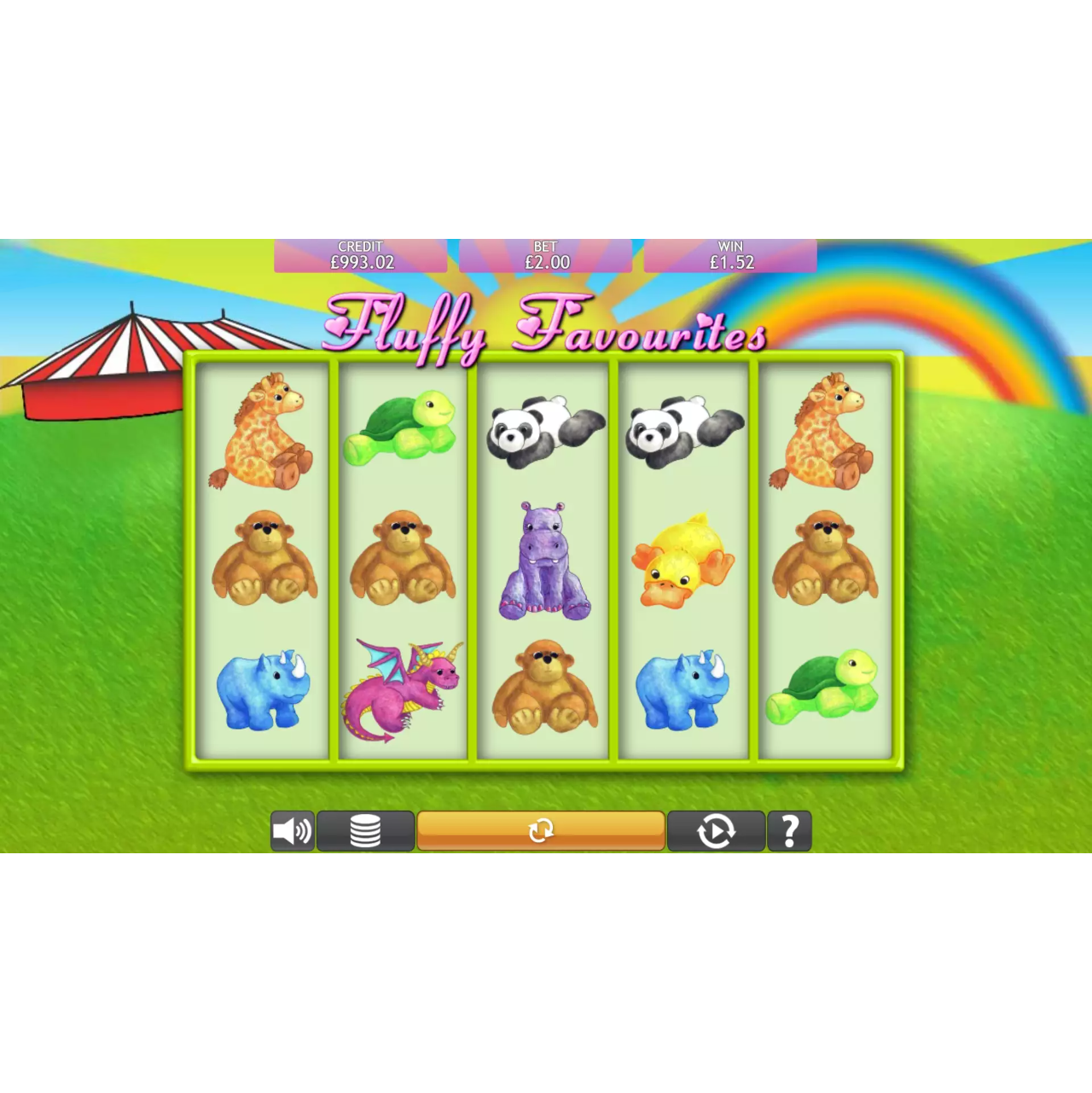
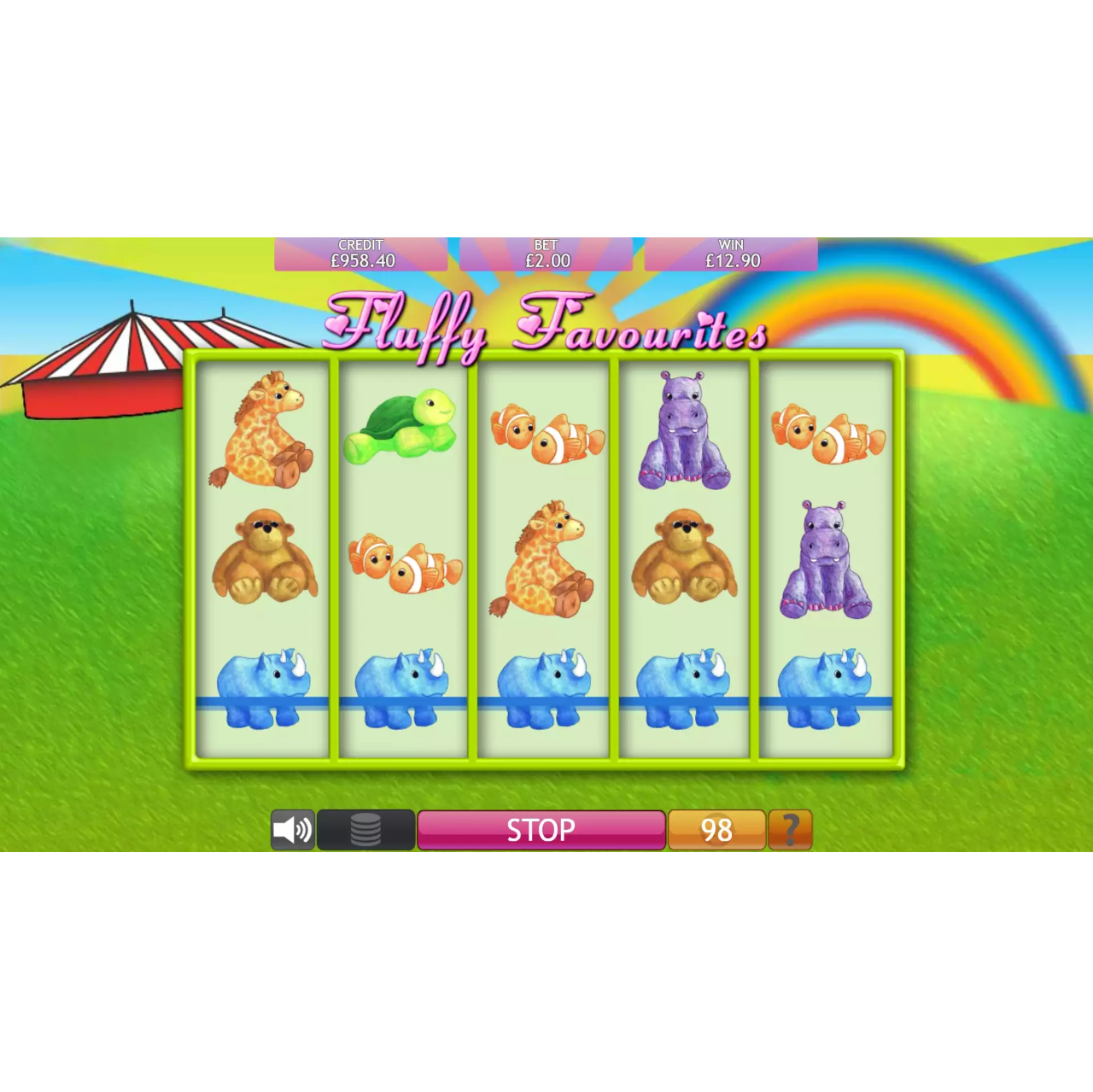
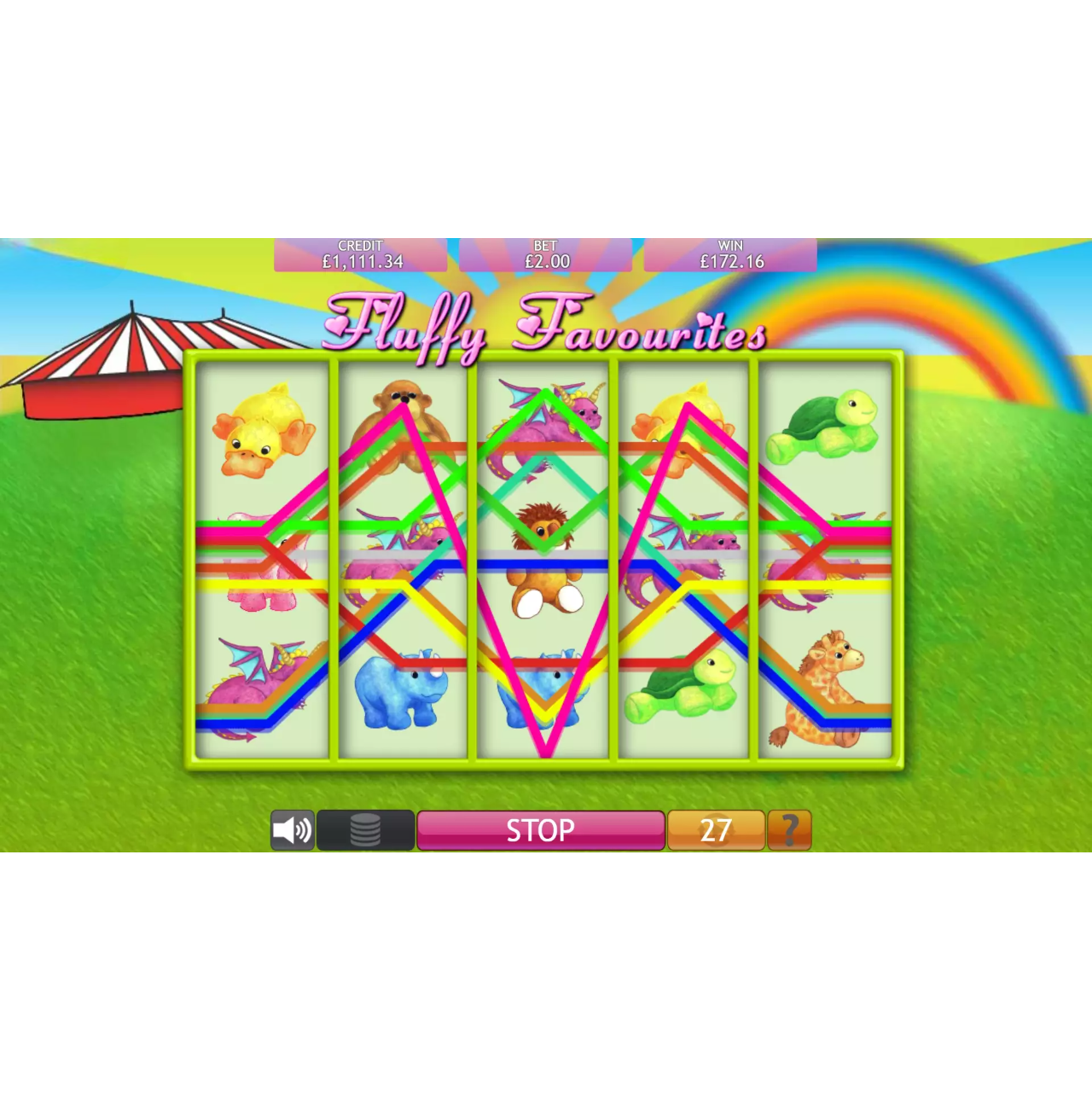
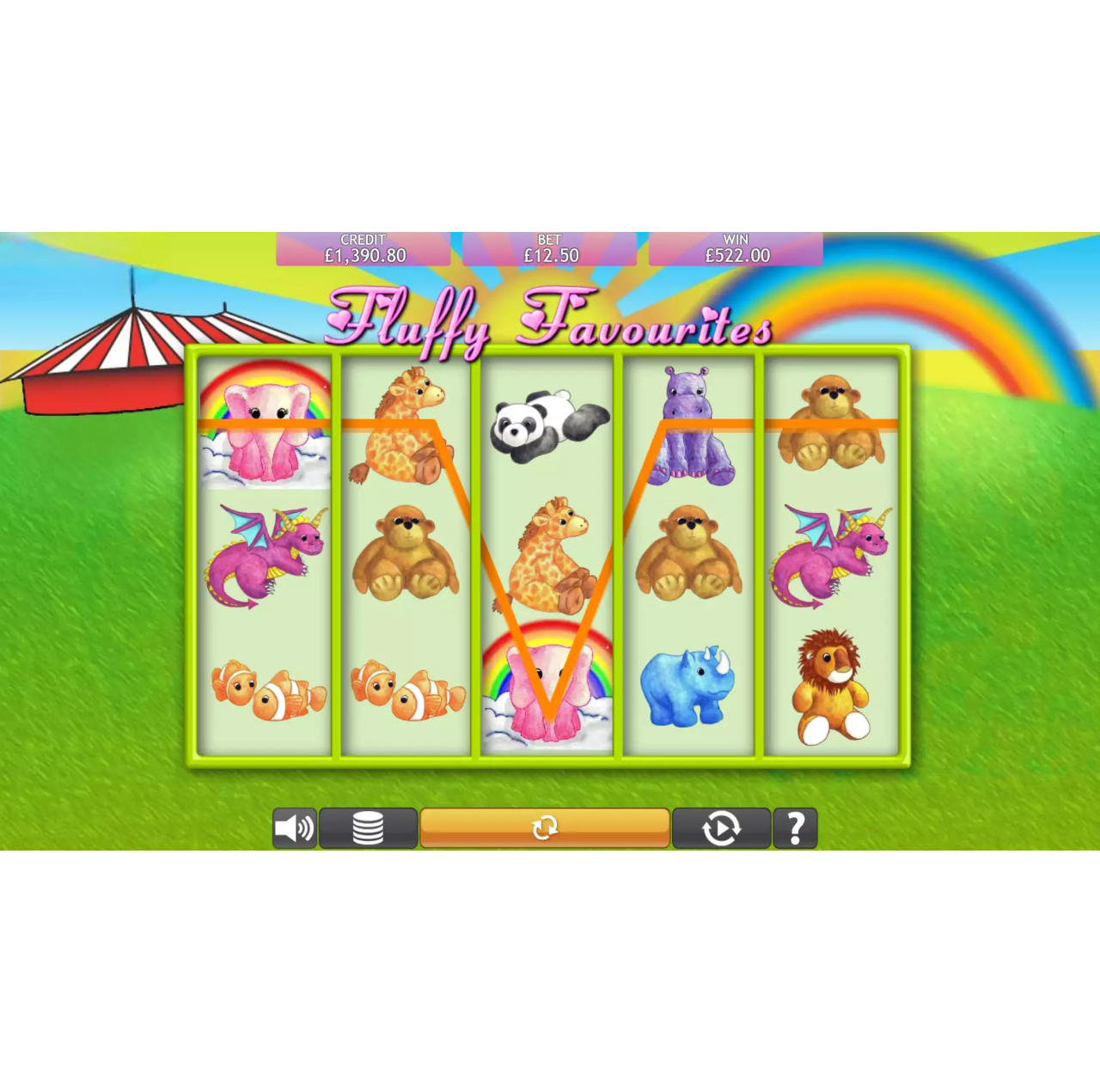
From an analytical standpoint, the most interesting feature of Fluffy Favourites is not its theme, but its refusal to abandon its core. The fairground aesthetic, the plush toy symbolism and the brightly coloured interface create an atmosphere that appears deliberately light-hearted. Yet beneath that softness lies a mechanical structure that is fundamentally traditional. Five reels, three rows, line-based payouts and event-driven bonus triggers define its architecture. There is no illusion of complexity here. The game tells you what it is within seconds.
The modern slot landscape is dominated by variable reel configurations, cascading systems and increasingly layered bonus formats. In such an environment, simplicity might appear outdated. However, simplicity can also create durability. The Fluffy Favourites franchise has demonstrated that mechanical transparency, when paired with distinctive branding, can maintain player recognition across changing technological cycles.
This page does not examine a single game in isolation. It analyses the franchise as a structural entity. I will explore how the original release established a mechanical identity, how subsequent versions expanded without destabilising that identity, and why the series continues to occupy a stable niche despite intense competition. The focus is behavioural, architectural and mathematical rather than promotional.
Soft aesthetics often generate assumptions of low intensity. In the case of Fluffy Favourites, that assumption can be misleading. The visual presentation may suggest casual entertainment, but the volatility profile in several iterations is far from trivial. This tension between appearance and probability is central to understanding the series’ endurance.
To evaluate Fluffy Favourites properly, one must move beyond nostalgia. Longevity alone does not equal quality. Instead, we must ask why this structure continues to function and for whom it is most suitable. Only then can we assess its place within the broader evolution of digital slot design.
From Toybox to Franchise – How Fluffy Favourites Became a Series
A Clean Evolution Path Across the Fluffy Favourites Editions
This timeline shows how the franchise developed without breaking its core identity: the releases are iterative, not chaotic.
Original
Classic 5×3, line-led play, and the fairground tone that defines the brand.
Remastered
Modernised visuals and interface polish while the underlying structure stays familiar.
Cash Variants
More direct reward framing, typically with tighter bonus delivery and reduced friction.
Hybrid / Slingo
Controlled format twists that keep the brand recognisable while changing the way sessions feel.
Modern Editions
More responsive delivery and cleaner UX, while keeping the franchise’s mechanical identity intact.
The origins of Fluffy Favourites lie in a period when online slot development was transitioning from Flash-based simplicity to more refined visual presentation, yet had not yet embraced the complexity that defines contemporary releases. The original title entered a market that valued recognisable paylines, predictable bonus triggers and moderate interface complexity. Its success was not accidental; it met the expectations of its era precisely.
The defining element of the original version was structural familiarity combined with thematic distinctiveness. The plush toy symbols were visually memorable, but the mechanics were comfortably orthodox. Players understood immediately how the game functioned. Adjustable paylines allowed for perceived control over stake exposure. Scatter symbols triggered free spins in a straightforward manner. Occasional pick-style bonus events introduced short bursts of interactivity without overwhelming the base game.
This foundation allowed the developer to expand the concept without fragmenting it. A franchise requires repeatable DNA. In Fluffy Favourites, that DNA consists of three components: line-based structure, event-triggered bonuses and fairground branding. Each subsequent iteration retained these components, even when modifying volatility distribution or adding secondary features.
The shift from a single product to a recognisable series occurred gradually. Remastered editions modernised graphics and sound design while maintaining the same reel layout. Later variants experimented with enhanced event density or alternative bonus formats. Yet none abandoned the fundamental five-reel grid. That consistency is significant. Many franchises lose coherence when each sequel alters the core mechanic. Fluffy Favourites did not.
From a structural perspective, this continuity reduces cognitive friction. A player familiar with one version can transition to another without relearning the entire rule set. That familiarity encourages exploration within the franchise rather than migration to unrelated titles.
The decision to maintain a traditional layout also positioned the series as an anchor for players who prefer line-based systems over cluster or ways mechanics. In behavioural terms, habit formation thrives on predictability. By preserving its framework, Fluffy Favourites fostered repeat engagement among those who value stable mechanics over novelty.
A franchise can fail in two opposing ways: by refusing to evolve or by evolving too aggressively. Fluffy Favourites navigated a middle path. Graphical updates, new bonus variations and occasional spin-off formats refreshed the brand without destabilising its recognisable structure. This balance between innovation and continuity explains its transition from standalone slot to enduring series.
Core Mechanical Identity – What Never Changes
The 5×3 Blueprint That Holds the Entire Series Together
This schematic shows the fixed grid, an example payline, a scatter marker, and the kind of short pick event the series is known for.
Architectural constants
The franchise stays readable because the fundamentals do not shift: the grid remains fixed, wins are line-led, and bonus events arrive as discrete interruptions rather than layered systems.
Pick event, not a second game
The pick-style moment is designed as a short break in rhythm. It feels interactive, but it sits inside the same underlying random outcome logic as the base game.
To understand the resilience of Fluffy Favourites, one must examine its mechanical constants. Regardless of edition, the series is defined by a five-reel, three-row grid with line-based payouts. The number of active paylines may vary across versions, but the structural logic remains constant. Symbols must align across predefined paths to generate returns. This is classical slot mathematics.
The adjustable paylines present in many editions deserve particular attention. In an era increasingly dominated by fixed configurations, line adjustment offers a perception of strategic agency. Players can reduce or expand exposure by altering the number of active lines. It is important to clarify that this does not alter underlying probability. It modifies distribution of stake across potential outcomes. Nevertheless, the psychological impact of choice is meaningful. It fosters engagement without distorting the mathematics.
Scatter symbols function as the principal gateway to free spins. Typically, three or more scatters trigger a predetermined set of additional spins. Within these bonus rounds, payout multipliers or enhanced event features may apply. The logic is transparent: accumulation of specific symbols leads to temporary rule modification. This clarity reduces ambiguity and supports mechanical literacy among players.
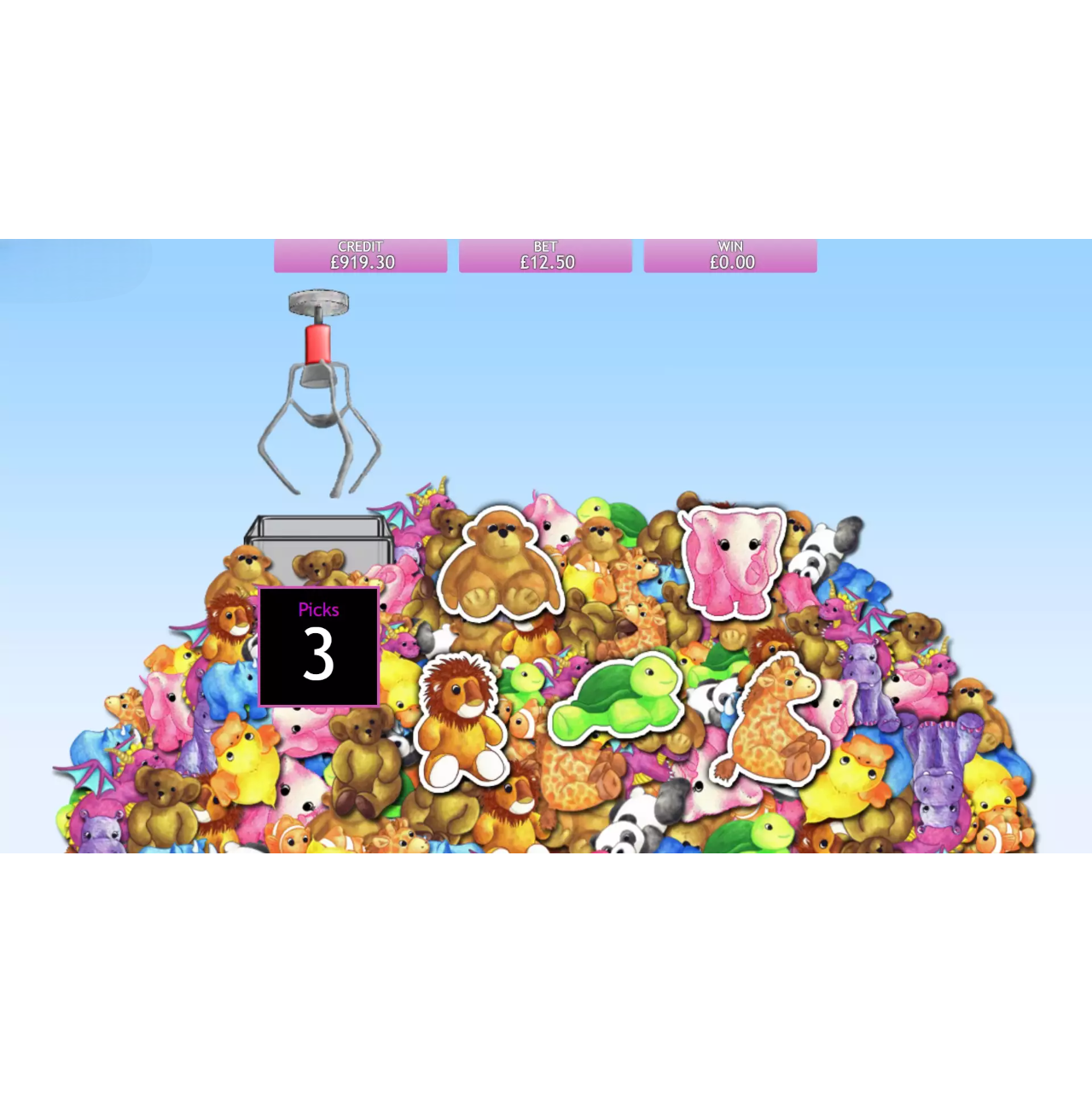
Another defining component is the pick-style bonus, frequently represented through toybox or claw machine imagery. When activated, the player selects from concealed prize options. This format introduces short bursts of perceived interaction. Importantly, the underlying outcome is predetermined by the random number generator prior to selection. The act of choosing shapes experience rather than probability. From a psychological standpoint, such events increase engagement without increasing cognitive load.
Volatility distribution varies across versions, yet the base game typically demonstrates moderate hit frequency combined with occasional larger bonus-driven returns. The series does not rely on cascading multipliers or exponential growth mechanics. Instead, it maintains a rhythm of incremental wins punctuated by feature activations. This rhythm contributes to its recognisable pacing.
One of the more subtle constants is interface restraint. Even remastered editions avoid excessive animation or intrusive visual effects. Buttons are clearly labelled. Paytable information is accessible. Spin speed remains manageable. These elements may appear mundane, but they reinforce structural stability. A stable interface encourages prolonged sessions because it minimises friction.
Crucially, none of the major variants replace the five-reel grid with alternative systems such as Megaways or cluster pays. The franchise does not attempt to compete within those categories. It preserves its classical identity. In doing so, it avoids dilution.
The mechanical identity of Fluffy Favourites can therefore be summarised as conservative, consistent and deliberately transparent. It is not innovative in the disruptive sense. Its innovation lies in controlled adaptation. By maintaining structural integrity while permitting measured expansion, the franchise sustains recognition without stagnation.
The Psychology of Soft Symbols and Hard Variance
Why a Soft Theme Can Still Produce Sharp Swings
Two session profiles on the same axes: a steadier baseline pattern and the kind of bonus-driven spike that changes how volatility feels.
One of the most misunderstood aspects of the Fluffy Favourites series is the relationship between its aesthetic softness and its mathematical behaviour. The plush animals, pastel tones and fairground motifs create a perceptual frame associated with comfort and informality. In behavioural research, visual framing significantly influences expectation formation. When a slot looks gentle, many players subconsciously anticipate gentle volatility.
This expectation is not always aligned with the underlying variance profile.
Several iterations within the Fluffy Favourites franchise operate with volatility levels that are moderate to moderately high. This does not place them in the extreme category of modern multiplier-heavy releases, but neither does it justify assumptions of low risk. The dissonance between appearance and outcome is subtle yet important. When the theme signals innocence, volatility can feel amplified because it contradicts expectation.
From a psychological perspective, the fairground setting plays a further role. Fairgrounds are associated with chance-based games, short bursts of excitement and prize uncertainty. The claw machine imagery embedded within some bonus events reinforces this association. Claw machines in physical environments are often perceived as skill-based despite being largely probability-driven. The parallel in the digital slot context creates a similar illusion of agency.
It is essential to emphasise that these design choices do not manipulate mathematics. The random number generator determines outcomes independently of symbol design. However, the way in which variance is experienced is not purely mathematical; it is interpretative. When a low-frequency high-value event occurs within a serious, high-intensity slot, players may attribute it to volatility. When it occurs within a visually playful environment, it may feel disproportionate.
The free spins feature contributes further to this dynamic. The accumulation of scatter symbols builds anticipation gradually. When activation occurs, the temporary rule shift – often involving multipliers or enhanced event frequency – creates a short period of intensified volatility. If the bonus underperforms, disappointment can be sharpened by the emotional build-up created through animation and sound cues.
This interplay between sensory softness and statistical firmness is central to the series’ identity. It neither disguises nor exaggerates its mathematics. Instead, it juxtaposes them with a theme that moderates emotional intensity while preserving structural risk.
In my analysis of long-standing slot franchises, this balance often correlates with durability. Extreme volatility attached to aggressive themes can exhaust players rapidly. Low volatility attached to neutral themes can lack memorability. Fluffy Favourites occupies a middle ground. Its theme reduces psychological harshness, while its variance preserves excitement.
Understanding this tension clarifies why the series appeals to a particular segment of players: those who appreciate recognisable structure but do not necessarily seek maximal intensity. The softness does not equate to safety. It equates to approachability.
Mapping the Franchise – Every Major Version Explained
A Structural Snapshot of the Main Fluffy Favourites Branches
A single comparison table that separates the editions by core structure, bonus delivery, and how the volatility tends to present in-session.
Major editions at a glance
This overview is designed to prevent repetition: it summarises the franchise branches without restating the surrounding text.
| Version | Core Structure | Bonus Style | Volatility Profile |
|---|---|---|---|
| Original | 5×3, adjustable lines | Pick + free spins | Moderate |
| Remastered | Same grid | Enhanced free spins | Moderate+ |
| Cash Editions | 5×3 | Direct reward bonus | Moderate |
| Hybrid | Modified overlay | Alternative format | Variable |
A franchise must expand without losing coherence. Fluffy Favourites achieves this through incremental variation rather than structural reinvention. Each major version modifies surface elements or feature density while retaining the core five-reel framework.
The original edition established the baseline: adjustable paylines, scatter-triggered free spins and pick-style bonus events integrated into a fairground aesthetic. This model prioritised clarity. The volatility was balanced enough to encourage extended sessions without eliminating the possibility of significant bonus-driven returns.
The remastered version refined visual assets and sound design. Animations became smoother, colour saturation was enhanced and interface responsiveness improved. Mechanically, however, it remained faithful to the original architecture. This approach modernised presentation without altering probability distribution in a radical way. The remaster functioned as reinforcement rather than reinvention.
Subsequent iterations introduced modified event density. Certain variants increased the frequency of secondary bonus triggers or added minor enhancements to free spin rounds. These adjustments did not change the grid configuration. Instead, they compressed or expanded the intervals between feature activations. From a behavioural standpoint, such modifications alter perceived pacing without dismantling identity.
Cash-focused editions emphasised direct prize collection events. In these versions, bonus rounds often incorporate immediate reward revelation rather than extended multi-stage progression. The shift is subtle but meaningful. It reduces cognitive overhead and shortens feature duration, which can appeal to players who prefer concise bonus outcomes.
Hybrid formats, including adaptations incorporating alternative mechanics such as Slingo-style elements, represent the most experimental branch of the franchise. Even here, brand continuity is maintained through symbol design and thematic consistency. The underlying principle remains recognisable: event-driven progression anchored to simple structural rules.
Importantly, no major version abandons the five-reel line-based structure in favour of cluster pays or expanding reel systems. This restraint prevents fragmentation. Each edition can be understood as a variation within a defined template rather than an entirely new species.
For analytical purposes, the versions can be grouped into three categories. The first includes classical editions prioritising line adjustment and balanced volatility. The second comprises remastered or visually enhanced releases maintaining identical mechanics with updated presentation. The third consists of derivative hybrids introducing controlled experimentation while preserving branding continuity.
This categorisation clarifies that the franchise does not expand laterally into unrelated mechanical territories. It expands vertically within its own boundaries. Such vertical expansion reinforces brand recognition. Players are not required to relearn the framework. They encounter familiar rules in modified contexts.
The strength of this model lies in cumulative familiarity. Each new version reminds players of the original experience while offering minor novelty. In behavioural economics, this is known as the familiarity-novelty balance. Too much novelty reduces retention. Too much familiarity reduces stimulation. Fluffy Favourites sustains equilibrium between the two.
Line Control and Stake Architecture – Old-School Flexibility in a Modern Market
Line Control as Exposure Architecture, Not a Mathematical Switch
This flow shows what changes when you adjust active lines: how fast you spend, how often you tend to hit something, and how the session feels.
Active Lines ↑
More active lines means more paid paths per spin.
More funded lines tend to register more small returns.
You spend the bankroll faster, which changes session pacing.
Active Lines ↓
Fewer active lines means lower exposure per spin.
Fewer funded lines can make the session feel quieter.
The maths does not change, but pacing often feels more manageable.
Adjustable paylines represent one of the most distinctive features of many Fluffy Favourites editions. In contemporary slot design, fixed paylines or ways systems dominate. These remove configuration choice in favour of simplified exposure. By contrast, adjustable lines allow players to determine how many winning paths are active during each spin.
It is crucial to clarify the function of line control. Activating more paylines increases total stake per spin because additional paths are funded. Deactivating lines reduces total exposure. However, this does not alter the probability of symbol generation. The random number generator operates independently of line selection. What changes is distribution: more active lines mean more opportunities for small wins but higher cost per spin.
From a behavioural standpoint, the option to adjust lines introduces perceived agency. Agency, even when limited to stake configuration, can enhance engagement. Players may experiment with fewer lines to extend session duration or activate all lines to increase hit frequency. The mathematics remain stable, but the experience feels tailored.
In the context of modern market trends, this feature is almost conservative. Many contemporary titles eliminate such options to streamline user experience. The Fluffy Favourites franchise retains them in several editions, signalling continuity with traditional slot philosophy.
Stake architecture within the series typically follows a tiered model. Bet per line multiplied by number of active lines determines total stake. This structure is transparent and easily calculable. Transparency reduces confusion, particularly for players accustomed to line-based logic rather than dynamic reel systems.
The existence of line control also influences volatility perception. When fewer lines are active, hit frequency may decrease because fewer combinations are eligible for payout. Conversely, activating all lines may produce more frequent small returns. These shifts can be interpreted emotionally as volatility changes, though mathematically they represent stake distribution adjustments.
The persistence of this architecture suggests deliberate positioning. The franchise does not attempt to replicate the unpredictability of cascading multipliers. Instead, it offers calibrated flexibility within a stable system. This appeals to players who value understanding over spectacle.
From a structural analysis perspective, line control functions as a bridge between old and new design philosophies. It retains classical engagement mechanics while existing within a modern digital interface. That hybrid identity reinforces the franchise’s reputation as accessible yet enduring.
Bonus Behaviour – Free Spins, Toybox Picks and Event Density
How the Feature Cycle Repeats and Why It Matters
The structure below reflects the natural rhythm of the series: base play, feature build, bonus deviation, and reset.
Pick Bonus as a Short High-Variance Event
Unlike free spins, the pick moment is a contained deviation. It interrupts the flow briefly, concentrates variance into a short reveal, and then releases the player back into the base rhythm.
Bonus features are the principal drivers of volatility within the Fluffy Favourites franchise. The base game establishes rhythm; the bonus rounds introduce deviation. Understanding how these features behave across editions is essential to assessing the structural integrity of the series.
The most common trigger mechanism remains the appearance of scatter symbols across the reels. When the required number is reached, a predefined set of free spins is awarded. During these rounds, payout conditions are temporarily modified. In some editions, multipliers apply to line wins. In others, additional bonus symbols are introduced with increased frequency. The core principle remains consistent: a temporary intensification of payout potential without alteration of the fundamental grid.
Free spins in Fluffy Favourites are generally finite and clearly defined. They do not evolve into multi-layered secondary games or complex branching paths. This simplicity has behavioural consequences. The anticipation phase – when two scatters appear and a third is awaited – creates tension. The activation phase produces heightened attention. The resolution phase concludes cleanly. There is no recursive system that extends unpredictably. Such clarity stabilises session pacing.
The pick-style bonus represents a different behavioural dynamic. Often themed around a toybox or claw machine, this feature interrupts the reel flow entirely. Upon activation, the player selects from concealed objects, each revealing a prize. The outcome is predetermined at the moment of trigger, yet the selection process creates perceived interactivity.
From a psychological standpoint, pick bonuses introduce short bursts of agency. The player feels involved in the outcome, even though probability has already been fixed. This design increases engagement without introducing strategic complexity. Importantly, the duration of these bonuses is usually concise. They do not overwhelm the base game but punctuate it.
Event density varies across versions. In classical editions, bonus triggers may appear at moderate intervals, preserving anticipation. In certain modernised variants, frequency of secondary features is marginally increased to maintain engagement in a market accustomed to rapid stimulation. However, the franchise avoids excessive compression of volatility. It does not convert into a constant stream of micro-events.
One subtle but significant characteristic is the separation between base volatility and bonus volatility. The base game often produces incremental line wins that sustain balance modestly. The bonus features, by contrast, hold disproportionate potential relative to average base outcomes. This separation encourages continuation of play in anticipation of feature activation. Yet because triggers are not excessively frequent, the structure avoids continuous escalation.
There is no evidence within the franchise of mathematical distortion through optional bonus purchases in its classical forms. In editions where such options exist, they represent compressed exposure rather than altered probability. Buying entry to a feature does not guarantee enhanced expected return; it accelerates variance into a shorter timeframe.
The overall behavioural profile of bonus features within Fluffy Favourites can be summarised as controlled intensity. They provide meaningful deviation from baseline rhythm without destabilising structural predictability. This balance contributes to franchise longevity. It allows the game to generate excitement without sacrificing coherence.
Mobile Adaptation and Technical Stability
Interface Continuity Across Screen Sizes
The reel grid remains intact, while controls reposition responsively. Visual identity is preserved without distortion of the 5×3 architecture.
Technical adaptation is frequently overlooked in structural analysis, yet it directly influences player retention. The Fluffy Favourites franchise transitioned from early desktop-focused environments to HTML5 compatibility with relative smoothness. This transition preserved mechanical identity while improving accessibility.
On desktop platforms, the five-reel grid occupies a centralised frame with clearly demarcated buttons for stake adjustment, line selection and spin control. The interface is uncluttered. Visual animations are restrained and do not obscure symbol visibility. Such clarity supports extended sessions because it reduces visual fatigue.
Mobile adaptation required spatial compression without distortion of functionality. In modern iterations, reel visibility remains intact despite reduced screen size. Buttons are repositioned for thumb accessibility. Information panels are collapsible rather than permanently displayed. These adjustments maintain structural familiarity while respecting ergonomic constraints.
Crucially, the pacing of animation does not accelerate excessively on mobile. Some contemporary slots increase spin speed to match perceived mobile consumption habits. Fluffy Favourites generally maintains consistent rhythm across devices. This preserves behavioural continuity. Players migrating between desktop and smartphone encounter the same tempo.
Technical stability also influences trust perception. Loading times are typically brief, and transitions between base game and bonus features occur without disruption. Such reliability reduces frustration and reinforces franchise credibility. In behavioural economics, friction can significantly decrease session length. Minimising friction therefore supports sustainability.
Audio design adapts similarly across devices. Sound cues signalling scatter appearance or bonus activation remain recognisable but are not intrusive. On mobile, where audio is often muted, visual cues compensate effectively. This dual signalling ensures that core triggers are perceptible regardless of environment.
The preservation of line adjustment and stake architecture within the mobile interface is particularly noteworthy. Rather than simplifying mechanics to accommodate smaller screens, the franchise retains configurability. This indicates confidence in its structural clarity.
In technical terms, the franchise demonstrates evolutionary rather than revolutionary adaptation. It did not abandon its architecture during the shift to mobile. Instead, it translated that architecture faithfully into a responsive framework. This continuity reinforces behavioural stability and prevents fragmentation of user experience.
Who This Series Is Actually For
Every long-standing franchise occupies a defined behavioural niche. Fluffy Favourites is no exception. Its appeal is neither universal nor accidental. It attracts players who prioritise structural transparency over mechanical novelty.
The first identifiable segment comprises individuals who prefer classical line-based systems. These players value the ability to visualise paylines, adjust exposure and interpret outcomes without deciphering cascading chains or expanding reel sets. For them, familiarity is not stagnation but reliability.
The second segment includes those who appreciate moderate pacing. The series does not bombard players with constant micro-features. It offers intervals of calm punctuated by discrete bonus events. This rhythm suits individuals who find high-intensity multiplier mechanics cognitively exhausting.
A third segment may consist of players drawn to aesthetic approachability. The fairground theme and plush symbolism reduce intimidation. For newcomers to online slots, such presentation can lower entry barriers. However, it must be emphasised that accessibility does not equate to low risk. Variance remains inherent.
Conversely, the franchise is unlikely to satisfy players seeking extreme volatility spikes or progressive jackpot escalation. It does not compete in the domain of exponential multiplier engines. Nor does it offer highly layered narrative progression within bonus rounds. Its structure is intentionally bounded.
The series may also be less attractive to those who prefer cluster pays or ways systems where reel expansion generates cascading complexity. Fluffy Favourites maintains fixed dimensions. Its satisfaction derives from clarity rather than unpredictability of layout.
In behavioural terms, the franchise functions as a stabilising anchor within a diverse portfolio. It provides an environment where probability unfolds within familiar boundaries. For some players, this predictability enhances comfort. For others, it may appear insufficiently innovative.
Understanding suitability is essential to responsible engagement. No slot structure guarantees consistent positive outcomes. What it can provide is alignment between player preference and mechanical design. Fluffy Favourites aligns with those who value traditional architecture, measured volatility and clear bonus triggers.
What Players Usually Ask About Fluffy Favourites
Structural Clarifications and Common Player Questions
Key mechanical and mathematical points summarised in a clear expandable format.
Volatility varies between editions, but many versions sit within the moderate to moderately high range. The base game often provides incremental line wins, while bonus rounds introduce more concentrated variance. It should not be categorised as extreme, yet neither should it be assumed to be low risk simply because of its visual theme.
No. Return-to-player percentages can differ between editions and may also vary depending on regulatory configuration. While the structural framework remains similar, RTP is a mathematical parameter selected within permitted ranges. It is important to consult the specific version being played rather than assuming uniformity across the franchise.
Most classical versions include adjustable paylines, allowing players to modify total exposure per spin. Some later or hybrid variants may adopt fixed structures. The presence of line control is common within the franchise but not universal.
The pick-style bonus is a defining feature of the original editions and appears in many derivatives. However, certain adaptations may alter or simplify the format. While the thematic reference often remains, the precise structure of the bonus can vary.
Mechanically, yes. The five-reel layout, line-based payouts and transparent bonus triggers are straightforward to understand. However, suitability in terms of financial risk depends on individual tolerance for variance. Simplicity of structure does not remove the inherent uncertainty of slot mathematics.
No. Increasing or decreasing stake modifies the scale of potential payouts, not the likelihood of feature activation. The random number generator operates independently of bet size.
In many regulated environments, a free-play version is offered. Demo play allows users to familiarise themselves with mechanics and pacing without financial exposure. Availability may depend on platform policies and jurisdiction.
Remastered and hybrid editions represent the most recent developments in presentation and interface design. However, modernity in graphics does not necessarily imply fundamental mechanical change. The core structure remains recognisable across releases.
A Franchise Built on Simplicity, Not Hype
Fluffy Favourites endures because it does not attempt to reinvent the slot format with every iteration. Its strength lies in disciplined repetition. The five-reel grid, line-based architecture and event-triggered bonuses form a stable template. Variations occur within that template, not outside it.
In a market increasingly defined by escalating multiplier systems and expanding reel mechanics, restraint can function as differentiation. The franchise occupies a position that is neither retro in a nostalgic sense nor aggressively modern in a disruptive sense. It maintains continuity.
The psychological contrast between soft presentation and structured variance contributes to its memorability. Players approach the game with assumptions shaped by its fairground aesthetic, yet they encounter mathematics that remains uncompromising. This tension generates engagement without spectacle.
From a design perspective, the series demonstrates that longevity does not require mechanical excess. It requires coherence. Each new edition reinforces recognisable components while introducing limited refinements. This approach fosters familiarity and reduces learning barriers, supporting long-term retention.
Technological adaptation has also been handled conservatively. The transition to mobile environments preserved pacing, line architecture and clarity of interface. Such consistency prevents fragmentation of user experience across devices.
No slot series should be evaluated solely by duration. Endurance must be contextualised within structural integrity. Fluffy Favourites has sustained itself not through constant escalation, but through measured continuity. It offers a classical framework with moderated evolution.
For players who value transparent mechanics, adjustable exposure and concise bonus events, the franchise provides a stable environment. For those seeking relentless volatility or progressive complexity, it may appear understated. Neither assessment is inherently superior. Suitability depends on preference.
Ultimately, Fluffy Favourites illustrates a broader principle within digital gambling design: durability often arises from balance rather than innovation alone. By preserving its architectural core while allowing incremental refinement, the series secures a distinct and enduring position within the online slot landscape.