
Sites Fluffy Favourites Explained: How the Series Is Presented, Found, and Experienced
What “Fluffy Favourites Sites” Actually Means
What the term means in practice
Generic casino site vs Fluffy Favourites oriented site
| Criteria | Generic casino site | Fluffy Favourites site |
|---|---|---|
| Game visibility | Often hidden in large rotating catalogues | Immediately accessible through search or grouping |
| Search behaviour | Partial or inconsistent results | Predictable and variant-aware |
| Series grouping | Separated entries without context | Clear family structure |
| Variant clarity | Similar names create confusion | Consistent naming across formats |
| Player intent | Optimised for browsing | Optimised for return visits |
Game visibility
Search behaviour
Series grouping
Variant clarity
Player intent
The expression fluffy favourites sites has developed through use rather than definition. It is not a marketing label and it is not a genre in the conventional sense. It is a functional term used by players to describe a specific type of platform behaviour.
At its core, the phrase refers to sites where the Fluffy Favourites slot series is handled with clarity and intent. These are platforms where the game is easy to locate, clearly identified, and presented as part of a recognisable group rather than an isolated title. The emphasis is on how the game is surfaced and organised, not on how it is promoted.
Fluffy Favourites occupies an unusual position in slot catalogues. It is old enough to be considered established, yet active enough to continue generating direct searches. Players do not stumble across it accidentally. They look for it deliberately. This changes the relationship between the player and the platform. When a player searches for a specific title, the platform’s role shifts from curator to facilitator.
Many sites are not designed around this behaviour. Their interfaces prioritise novelty, promotional rotation, or provider-based sorting. In such environments, long-standing titles are often deprioritised or buried. Even when Fluffy Favourites is present, it may be difficult to distinguish from its variants or locate without prior knowledge of filtering systems.
As a result, players begin to categorise sites informally. A site where the game can be found quickly becomes known, through repeated use, as a Fluffy Favourites site. This label does not imply exclusivity or special treatment. It simply reflects an absence of friction.
The importance of this distinction is often underestimated. Friction changes perception. A game that is hard to find feels less relevant, regardless of its actual popularity. Conversely, a game that is easy to access reinforces the impression that it remains current and supported.
This page examines that dynamic. It treats fluffy favourites sites as a structural phenomenon rather than a recommendation category. The focus is on how platforms signal awareness of player behaviour through layout, grouping, and visibility. Understanding this allows readers to recognise why some sites feel immediately usable for this series while others feel unnecessarily opaque.
The Fluffy Signature. Core Identity of the Series
The Fluffy Signature. Core Identity of the Series
This split view isolates the series identity into two layers. The left side captures presentation cues, while the right side keeps the mechanics fixed and readable.
VISUAL LAYER
soft feel- Plush symbols
- Fairground theme
- Calm animations
- Controlled colour palette
MECHANICAL LAYER
hard structure- 5×3 layout
- Fixed paylines
- Pick-based bonus
- Stable rhythm
The continued presence of Fluffy Favourites across modern platforms is rooted in a clearly defined and consistently applied identity. Unlike many titles that rely on periodic reinvention, this series has remained stable in both presentation and structure.
The visual design establishes a controlled environment. Plush characters, fairground motifs, and saturated colours create a sense of activity without visual overload. The screen communicates abundance, but it does so calmly. There are few abrupt transitions and little visual noise competing for attention. This contributes to a perception of balance rather than excitement-driven intensity.
From a mechanical perspective, the game relies on a familiar framework. The reel layout and payline structure follow conventions that many players recognise instantly. There is no attempt to disguise complexity or introduce layered systems. The rules are clear, the outcomes readable, and the pacing consistent. This predictability reduces decision fatigue and allows the player to focus on anticipation rather than interpretation.
The pick-based bonus feature plays a central role in defining the experience. It introduces a temporary change in interaction without altering the underlying structure. During this phase, the player shifts from observing outcomes to revealing them. This moment of engagement stands apart from the base game and gives the series a distinctive rhythm.
Importantly, this feature is not overextended. It appears, resolves, and exits cleanly. There is little lingering uncertainty or extended animation. The result is a bonus mechanic that feels contained and purposeful rather than dominant.
Across the various versions of Fluffy Favourites, these principles are largely preserved. Changes tend to affect reward structures or thematic overlays rather than fundamental behaviour. Players encountering a new version typically recognise the cadence immediately, even if surface elements differ.
This consistency has consequences beyond the game itself. It shapes expectations about how the series should be presented on a site. When variants are grouped together and labelled clearly, the experience feels aligned with the game’s internal logic. When they are fragmented or inconsistently named, the disconnect is noticeable.
The Fluffy signature is therefore not only a design characteristic but a reference point. It provides a stable frame against which platforms are judged, often unconsciously, by players who return to the series over time. Sites that reflect this stability in their structure tend to feel more coherent and easier to navigate.
These foundations explain why the series continues to attract deliberate searches and why the way it is hosted matters. Everything that follows builds on this shared understanding between player, game, and platform.
Expectation vs Reality. Why “Fluffy” Does Not Mean Gentle Gameplay
Expectation vs Reality
This view recalibrates perception. It shows where expectations begin and where session behaviour often settles once rhythm and contrast take control.
Tone
surface cuePacing
session rhythmContrast
feature impactThe name Fluffy Favourites carries a set of assumptions that are rarely examined. For many players, the word fluffy suggests softness, safety, and low intensity. These expectations are reinforced by the visual design, which appears welcoming and non-confrontational. The result is a gap between what the game looks like and how it actually behaves.
In practice, the gameplay rhythm of Fluffy Favourites is not particularly gentle. The base game often produces extended sequences with limited events, followed by abrupt shifts when features activate. This pattern is not unusual for slots of its era, but the contrast is more noticeable here because the presentation downplays tension rather than highlighting it.
The visual layer performs an important psychological function. Bright colours, rounded symbols, and familiar fairground imagery reduce perceived risk. The game does not signal danger or volatility through aggressive animation or sound. Instead, it maintains a steady tone even when outcomes fluctuate. This can lead players to underestimate how uneven the experience may feel over longer sessions.
From a behavioural perspective, this mismatch influences how players approach the game. Expectations shape tolerance. A player who believes they are engaging with a low-pressure experience may persist longer through unproductive phases, interpreting them as temporary rather than structural. When the bonus eventually triggers, the contrast feels sharper, even if the overall balance of the game remains unchanged.
This expectation gap is not accidental. It reflects a deliberate separation between presentation and mathematical behaviour. The design invites entry without advertising intensity. For experienced players, this creates a familiar pattern: calm surface, irregular pacing underneath. For less experienced players, it can be misleading.
Understanding this distinction is important when evaluating sites that host the series. Platforms that frame Fluffy Favourites as a purely casual option may unintentionally reinforce incorrect assumptions. Those that present the game neutrally, without emphasising either softness or intensity, tend to align more closely with how the game actually plays.
The value of this section lies in recognition rather than warning. Fluffy Favourites is not deceptive, but it is often misunderstood. The difference between appearance and behaviour is part of its identity, and acknowledging that difference allows players to engage with the game more deliberately.
The Discovery Problem. Why Fluffy Is Often Hard to Find
The Discovery Problem
This flow shows why the issue is structural. A player’s intent is consistent, but platform design choices introduce predictable friction points before the outcome is reached.
Despite its recognisable name, Fluffy Favourites is frequently difficult to locate on many platforms. This is not due to rarity or lack of licensing, but to structural decisions made at the site level.
Most modern gambling sites prioritise either promotional content or novelty. New releases rotate through front-facing sections, while older titles are pushed deeper into catalogues. In this environment, a long-standing game like Fluffy Favourites can become functionally invisible, even when it remains available.
One common barrier is login dependency. On some platforms, full game libraries are only accessible after registration. Until that point, search results and category listings may be restricted. For players attempting to confirm whether Fluffy Favourites is available, this creates unnecessary uncertainty.
Another issue is filtering logic. Games may be grouped by provider, by feature, or by release period, but not by series. Variants of Fluffy Favourites can appear under different names or be separated entirely, making it difficult to identify the full range of related titles. Without prior knowledge, a player may assume that only one version exists.
Naming conventions add further friction. Jackpot editions, updated versions, and alternative formats may omit the base title or modify it slightly. From a system perspective, these are distinct products. From a player perspective, they are part of the same family. When sites fail to reflect this distinction, navigation becomes fragmented.
These issues combine to create what can be described as a discovery problem. The game is present, but not surfaced. Players must adapt to the site’s internal logic rather than the site adapting to how players search. Over time, this leads to informal categorisation. Platforms where the game is consistently easy to find become known as reliable destinations for the series.
This is the context in which the idea of a Fluffy Favourites site emerges. It is not defined by exclusivity or promotion, but by the absence of obstacles. A site that reduces the steps required to locate the game signals an understanding of player intent.
Recognising this problem shifts the focus away from content volume and towards structure. Availability alone is not sufficient. Visibility, grouping, and naming coherence determine whether a familiar title remains accessible in practice.
These structural considerations form the basis for how players judge platforms, often without articulating the reasons. The sections that follow examine how these patterns influence behaviour and how different site designs respond to them.
How Players Actually Search for Fluffy Favourites
How Players Actually Search for Fluffy Favourites
The order below reflects typical user behaviour. Players start with the simplest action and only move to deeper navigation when the site forces them to.
Direct name search
Users type the title into the site search and expect an immediate match. If this fails, confidence drops quickly.
Provider-based navigation
When title search is unreliable, users switch to provider filters. This step requires prior knowledge and adds friction.
Catalogue browsing
RareScrolling through categories is usually a last resort. The series is rarely discovered by browsing unless it is surfaced deliberately.
When players look for Fluffy Favourites, their behaviour is usually direct and purposeful. They do not browse casually or rely on discovery through featured sections. Most searches begin with the title itself. This is a key distinction, because it places pressure on a site’s internal search and categorisation systems rather than on its promotional layout.
The most common approach is a direct name search. Players type the title into a search field expecting an immediate result. When this works, confidence in the platform increases. When it does not, frustration follows quickly. A failure at this stage often leads players to assume the game is unavailable, even when it exists elsewhere in the catalogue.
If direct search fails, players tend to move to provider-based navigation. This requires prior knowledge. The player must already know which studio developed the game and how the site labels its providers. This extra step filters out casual users and disproportionately affects those returning after a long absence.
Browsing by category is typically the least effective method. Fluffy Favourites rarely fits neatly into broad labels such as classic, feature-rich, or themed slots. As a result, it is often misplaced or diluted among unrelated titles. Players who rely on browsing are therefore less likely to encounter the game accidentally.
These patterns reveal a consistent theme. Players approach Fluffy Favourites as a known destination, not as something to be discovered. Sites that recognise this tend to prioritise accurate search results and clear naming. Sites that do not force players to adapt to internal logic that was never designed for title-specific intent.
Understanding this behaviour helps explain why certain platforms gain a reputation for being reliable places to find the series. Reliability, in this context, is not about quality or reward. It is about predictability and reduced effort.
The Fluffy Favourites Ecosystem. One Brand, Multiple Formats
The Fluffy Favourites Ecosystem
This map treats the series as a family. The core title sits at the centre, with common formats branching outward.
Classic presentation and rhythm, used as the baseline for comparison across formats.
External jackpot layer added on top of familiar play, changing emphasis without changing identity.
Updated presentation or technical delivery, typically preserving the core cadence players recognise.
Bonus structure and triggers adjusted, creating different session feel while staying within the family.
Brand identity carried into a different category, keeping theme and recognition while changing interaction model.
Fluffy Favourites is not a single game in isolation. Over time, it has developed into a small ecosystem of related formats that share a core identity while differing in structure and emphasis. Treating these formats as unrelated products misrepresents how players understand the series.
At the centre of this ecosystem is the original slot. Its mechanics, pacing, and visual language form the reference point against which all other versions are judged. Players returning to the series often start here, either intentionally or by default.
Surrounding this core are various extensions. Jackpot versions add an external reward layer that changes the focus of play without significantly altering the base mechanics. Remastered editions adjust presentation or technical performance while preserving familiar rhythms. Feature-modified versions experiment with bonus structures or trigger conditions, offering variation without abandoning recognisability.
From a player’s perspective, these formats are not interchangeable. Each produces a slightly different experience, even when the visual theme remains constant. Some versions feel slower and more deliberate. Others introduce sharper contrasts between base play and bonus phases. These differences matter to players who have developed preferences over time.
The problem arises when sites fail to reflect this ecosystem. Listing one version without reference to others suggests limitation rather than choice. Separating variants across unrelated sections obscures their relationship. Players may conclude that only a single option exists, or that alternatives are unavailable on the platform.
Sites that handle the ecosystem well tend to group versions clearly and label them consistently. This does not require explanation or instruction. It simply allows players to recognise the scope of what is available and to choose accordingly.
Viewing Fluffy Favourites as an ecosystem rather than a single title changes how availability is assessed. The question becomes not only whether the game exists, but whether its range is represented accurately. This perspective is central to understanding what distinguishes a functional Fluffy Favourites site from one that merely hosts a familiar name.
The following sections build on this idea, examining how differences between formats affect behaviour and how sites either support or undermine that understanding through their design choices.
Behavioural Differences Between Fluffy Variants
Behavioural Differences Between Variants
This is not a payout comparison. It is a session-logic view showing why variants that look similar can feel different in pacing and feature rhythm.
Although the Fluffy Favourites series presents a consistent visual and thematic identity, its different versions produce noticeably different behavioural patterns. These differences are not always apparent at first glance, but they become clear over extended play or repeated exposure.
One of the most significant variables is pacing. Some variants maintain long stretches of base play with relatively few interruptions, creating a steady but restrained rhythm. Others introduce more frequent feature triggers or layered mechanics that break the flow more often. For players familiar with the original, these changes alter how attention and patience are distributed during a session.
Trigger frequency also plays a role. In certain versions, bonus activation feels sporadic and separated by long intervals. In others, the path to features appears more accessible, even if the outcomes are not substantially different. This affects perception more than reality. A game that triggers more often feels more active, even when the overall balance remains similar.
Bonus structure further differentiates the experience. Some variants rely heavily on pick-based outcomes with immediate resolution. Others combine selection with multipliers, respins, or extended sequences. These design choices influence how long a bonus holds the player’s focus and how clearly its impact is understood.
These behavioural differences matter because players rarely approach all Fluffy versions with the same expectations. Familiarity with one format can shape assumptions about another. When a site presents these variants without context or grouping, it increases the likelihood of mismatch between expectation and experience.
Platforms that support the series effectively tend to make these differences legible. Clear naming, logical grouping, and consistent presentation help players recognise that they are choosing between related but distinct experiences rather than identical repetitions.
Understanding these behavioural nuances provides a more accurate framework for evaluating both the games themselves and the sites that host them. It shifts attention away from surface similarities and towards how design decisions influence engagement over time.
Toybox Mechanics. Why the Pick Feature Anchors the Series
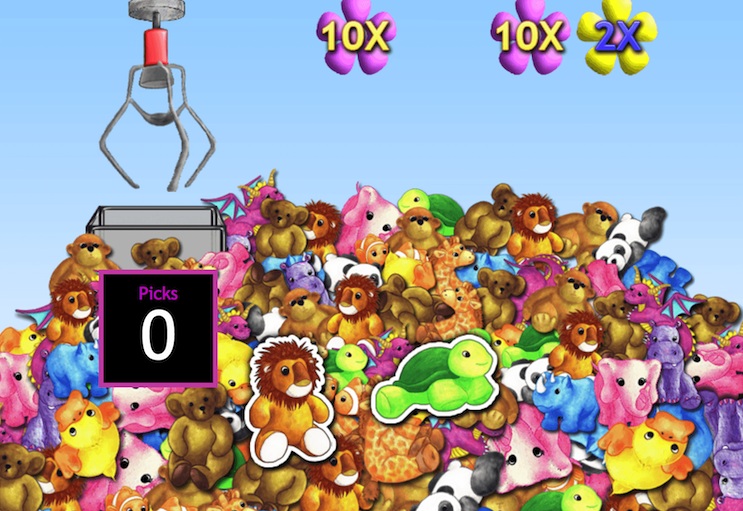
The pick-based bonus commonly associated with the Toybox element is central to the identity of Fluffy Favourites. It is not simply an additional feature, but a structural anchor that shapes how the game is remembered and discussed.
During base play, the player’s role is largely passive. Outcomes are revealed through spinning reels, and interaction is minimal. The Toybox feature interrupts this pattern. When it appears, the player is invited to make selections that reveal prizes or modifiers. This shift is brief, but it is psychologically significant.
The act of choosing introduces a sense of involvement that contrasts with the rest of the game. Even though the results are predetermined, the process feels participatory. This creates a moment of heightened attention that often becomes the most memorable part of a session.
Another important aspect is resolution speed. Toybox bonuses tend to resolve quickly. There is little prolonged animation or extended buildup. Selections are made, outcomes revealed, and the game returns to base play. This keeps the bonus distinct and prevents it from overwhelming the overall rhythm.
Across different variants, the specifics of the Toybox mechanic may change, but its role remains similar. It serves as a focal point rather than a spectacle. Players come to associate the series with this interaction, and its absence or alteration is immediately noticeable.
For sites that host Fluffy Favourites, recognising the importance of this mechanic influences presentation choices. Platforms that describe or label variants clearly allow players to anticipate how the Toybox element will function. Those that obscure these details reduce clarity and weaken the connection between expectation and experience.
The Toybox feature illustrates how a relatively simple mechanic can define an entire series. Its consistency provides a reference point that links different versions together and reinforces the overall identity of Fluffy Favourites.
Demo Layer. When Play Free Is Available and When It Is Not
Demo Layer
Demo visibility functions as a behavioural signal. Users interpret it instantly, often without reading any explanation.
Access to a demo version of Fluffy Favourites is inconsistent across platforms. While many players expect a play free option to be universally available, this expectation does not align with how sites structure access to their libraries.
On some platforms, demo play is offered openly and without restriction. The game can be launched immediately, allowing players to familiarise themselves with pacing, features, and presentation. On others, demo access is limited or removed entirely, often without explanation. In these cases, the game may only be visible or playable after registration.
This inconsistency is not random. It reflects a combination of regulatory practices, commercial priorities, and technical decisions. Some sites restrict demo play to logged-in users to control exposure or to align with internal compliance frameworks. Others remove demos from older titles to prioritise engagement with newer releases.
From the player’s perspective, this creates uncertainty. A missing demo can be interpreted as a missing game, even when the full version is available. Conversely, the presence of a demo often serves as confirmation that the series is actively supported on the platform.
The role of demo play within the Fluffy Favourites ecosystem is primarily informational. Players use it to re-establish familiarity rather than to experiment. The mechanics are already known, but the rhythm and behaviour may vary between versions. Demo access allows these differences to be assessed without commitment.
Sites that handle this layer clearly tend to reduce confusion. When demo availability is predictable and consistent, players are better able to navigate the catalogue. When it is sporadic or hidden, it adds another layer of friction to an already fragmented discovery process.
Understanding how and why demo access varies helps explain why some platforms are perceived as more usable for the series than others. The issue is not entitlement, but clarity.
From Slots to Bingo. How Fluffy Became a Cross-Category Brand
How the Fluffy Favourites Brand Moves Between Game Formats
This table compares the slot and bingo formats to show what stays recognisable and what changes in the way the game plays. The identity remains consistent, while pacing and outcomes shift with the format.
Reels & personal rhythm
- Stays: characters, fairground cues, palette discipline
- Changes: tempo is individual; feedback is reel-centric
Rounds & communal pacing
- Stays: instant recognition, soft identity, consistent cues
- Changes: fixed intervals; “group moment” replaces spins
| Comparison point | Slot version | Bingo version |
|---|---|---|
| Interaction model | Spin-led, individual input | Round-led, timed intervals |
| Pacing | Player-controlled rhythm | Communal / platform-paced rhythm |
| Outcome pattern | Immediate per-spin feedback | Shared outcome at round moments |
| Recognition layer | Plush cast, fairground tone, and controlled palette remain consistent across formats | |
| What the crossover proves | The brand functions as theme and tone first — mechanics can change without breaking recognition | |
What transfers
- Plush character set
- Fairground framing & calm motion
- Controlled, soft palette
What switches
- From individual tempo → timed rounds
- From per-spin feedback → shared outcomes
- From “solo session” → communal rhythm
Fluffy Favourites has extended beyond its original slot format into other game categories, most notably bingo. This transition is significant because it demonstrates that the brand functions independently of its original mechanics.
In the move to bingo, much of the visual identity is retained. Plush characters, fairground themes, and familiar colour palettes are carried over. These elements provide continuity and allow players to recognise the brand immediately, even in a different game structure.
What changes is the nature of interaction. Bingo introduces communal pacing, fixed intervals, and shared outcomes. The individualised rhythm of slot play is replaced by a collective experience. Despite this shift, the Fluffy identity remains intact because it was never solely defined by spinning reels.
This crossover reveals an important aspect of the series. Fluffy Favourites operates as a theme and tone rather than a specific mechanical formula. Its recognisability allows it to adapt without losing coherence.
For players, this expansion can be either appealing or disorienting. Those familiar only with the slot may not expect the brand to appear in a bingo context. Others may appreciate the continuity and view it as an extension rather than a departure.
From a platform perspective, this crossover introduces additional complexity. Sites that host both formats must decide whether to group them together or separate them by category. The choice affects how players perceive the scope of the brand.
When handled carefully, the transition reinforces the idea of Fluffy Favourites as a broader ecosystem. When handled poorly, it fragments the identity and weakens recognition.
This cross-category presence underscores the importance of structure and presentation. As the series expands, the way it is organised on a site becomes increasingly influential in shaping how players understand and engage with it.
What Defines a Proper Fluffy Favourites Site
What Defines a Proper Fluffy Favourites Site
This checklist is not a recommendation. It is a practical way to evaluate whether a platform genuinely supports the series rather than listing it incidentally.
Search visibility
The title appears reliably in internal search without workarounds.
Series grouping
Related versions are presented together rather than scattered across categories.
Multiple variants
More than one format is accessible, signalling intentional catalogue support.
Mobile stability
The experience remains consistent across screen sizes and devices.
Clear info pages
Supporting pages explain versions, access rules, and limitations without ambiguity.
A site that presents Fluffy Favourites effectively does so through structure rather than promotion. The defining characteristics are not visual flair or marketing emphasis, but clarity and coherence.
Visibility is the first indicator. The series should be easy to locate through direct search and logical categorisation. When a player types the name, the result should appear without ambiguity. If multiple versions exist, they should be recognisable as part of the same family rather than isolated entries.
Provider clarity follows. A site that clearly identifies the studio behind the game reduces confusion, particularly for players who use provider filters as a secondary navigation method. Ambiguity at this level suggests poor catalogue management rather than deliberate design.
Range also matters. A proper Fluffy Favourites site typically hosts more than a single version. The presence of multiple formats signals active support and an understanding that the series functions as an ecosystem. Conversely, a lone entry with no contextual links feels incomplete.
Mobile stability is another practical factor. Many returning players access familiar titles on mobile devices. Sites that fail to optimise loading, scaling, or interaction undermine the accessibility that draws players to the series in the first place.
Finally, information transparency plays a role. Clear game descriptions, feature outlines, and version distinctions help players align expectations with experience. This does not require extensive explanation, only accuracy and consistency.
Taken together, these elements form a functional definition. A proper Fluffy Favourites site is one where the series is treated as a recognised product with specific usage patterns, not as an interchangeable item in an overcrowded library.
Frequently Asked Questions About Fluffy Favourites Sites
Frequently Asked Questions About Fluffy Favourites
Many platforms limit full catalogue visibility until login. Search results and listings may be restricted, making the game appear unavailable.
No. While the visual identity is consistent, pacing, bonus structure, and session rhythm differ between versions.
No. The term reflects presentation rather than gameplay behaviour. Long quiet phases and sharp shifts can still occur.
This usually reflects licensing or catalogue limitations rather than the absence of other versions.
No. Demo access depends on site policy and regulatory context and may be restricted to registered users or removed entirely.
Closing Logic. When Fluffy Favourites Sites Make Sense and When They Do Not
Fluffy Favourites sites are not designed to appeal to everyone, and they do not need to be. Their value lies in how closely they align with a particular set of expectations formed through familiarity rather than novelty.
These sites tend to suit players who return to known titles with clear intent. This includes those who have prior experience with the Fluffy Favourites series and are looking for consistency rather than experimentation. For such players, the appeal lies in recognition, predictable structure, and the ability to locate a familiar game without navigating unnecessary layers of promotion or distraction.
They also make sense for players who prefer clearly defined sessions. The rhythm of Fluffy Favourites, especially across its established variants, supports measured play rather than constant stimulation. Players who value calm presentation and stable mechanics often find this environment more comfortable than platforms built around rapid content rotation.
In terms of scenarios, Fluffy Favourites sites are most appropriate when the goal is straightforward access. This includes short return visits, mobile sessions, or moments when the player already knows what they want to play. In these cases, reduced friction and clear organisation matter more than breadth or novelty.
However, the Fluffy ecosystem does not suit every expectation. Players who prioritise constant new releases, experimental mechanics, or highly dynamic interfaces may find the experience limited. The series does not reinvent itself frequently, and its core structure remains deliberately stable. For some, this consistency can feel restrictive rather than reassuring.
Similarly, players seeking highly volatile or visually aggressive experiences may perceive a mismatch between presentation and intensity. While Fluffy Favourites can produce uneven pacing, it does not emphasise tension through design. Those who prefer explicit signals of risk or complexity may find the series understated.
A clear understanding of these boundaries is important. Fluffy Favourites sites function best when approached as focused environments rather than universal solutions. They succeed by doing a specific thing well, not by trying to satisfy every possible preference.
This closing perspective does not promote or discourage engagement. It simply places the Fluffy Favourites ecosystem in context. When the expectations align, these sites offer clarity and familiarity. When they do not, the limitations become apparent. Recognising the difference allows players to navigate platforms with greater confidence and fewer assumptions.