
Hack Tricks in Fluffy Favourites: Understanding the Game Instead of Chasing Myths
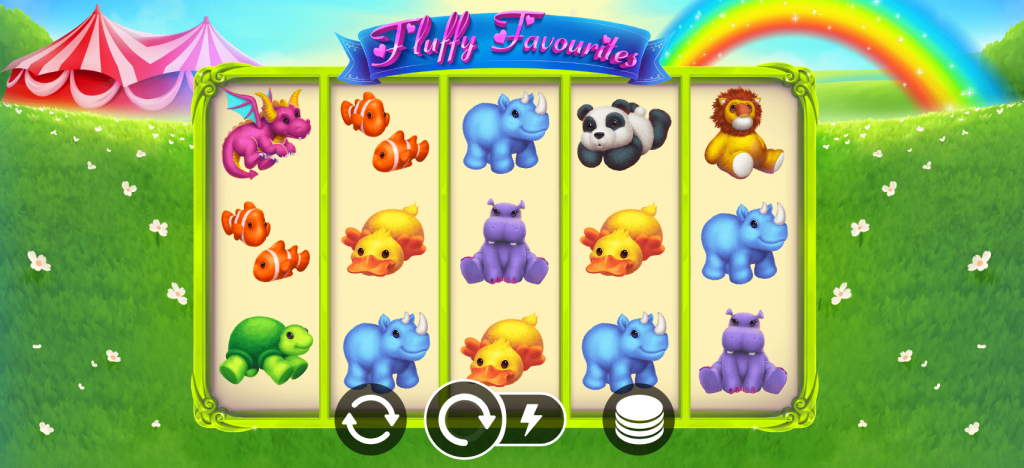
Understanding the Search for a “Fluffy Favourites Hack”
The search phrase “Fluffy Favourites hack” is not as literal as it appears. In my work studying gambling behaviour, I have seen this wording surface repeatedly around games that are emotionally engaging but cognitively unclear. When players feel involved yet uncertain, they search for explanations that promise control. The word “hack” becomes a convenient label for that search.
In the case of Fluffy Favourites, this reaction is particularly understandable. The game presents itself as friendly, familiar, and uncomplicated, while the actual experience often feels uneven. Long stretches of uneventful play can be followed by short bursts of excitement. Bonus symbols appear frequently enough to attract attention, but not often enough to satisfy expectation. Over time, this contrast creates tension, and tension demands an explanation.
Most players are not genuinely asking how to break the software. They are asking why the game behaves in a way that feels inconsistent. They want to know whether certain moments are better than others, whether some decisions matter more than they appear to, and whether continuing to play is rational or merely emotional. The term “hack” is simply a shortcut for these questions.
Intent, clarified
A “hack” search is usually a translation request
These words are rarely literal. They usually mean: predictability, clarity, protection, or control.
Translation ticket
It is important to be precise at this point. There is no technical exploit, cheat, or hidden method that alters outcomes in Fluffy Favourites. The game operates on regulated random processes that do not respond to timing, stake changes, or player behaviour. Spins do not remember previous results, and bonuses are not “due” in any meaningful sense. Any claim to the contrary misunderstands how modern slot systems function.
However, dismissing the topic at that point would ignore the real issue. The persistence of hack-related searches tells us that something in the design consistently creates the impression that the game can be worked out. That impression does not come from mathematics, but from presentation. Visual rhythm, symbol placement, near-miss effects, and familiar animations combine to create a sense of momentum. Players feel that progress is being made, even when the underlying probabilities remain unchanged.
What players usually expect from a “hack” includes predictability, efficiency, or reassurance. They want confirmation that they are not wasting time or money, and that their experience follows some intelligible pattern. What actually exists is a carefully constructed experience that feels responsive without being controllable. Understanding that difference is the real starting point for analysing Fluffy Favourites properly.
Why Fluffy Favourites Is a Series, Not a Single Slot
series, not a single slot
Same branding, different behaviour
The theme can stay familiar while the structure underneath changes how a session feels. Select a variant and compare the practical fit.
Classic: fixed rhythm
variantA line-led experience with repeatable pacing. It can feel steadier because the core loop stays consistent from spin to spin.
A second source of confusion, and one that strongly reinforces the idea of hidden tricks, is the assumption that Fluffy Favourites is a single, uniform game. In reality, it is a series of related titles that share a visual identity but differ in structure, pacing, and volatility. Treating them as interchangeable leads directly to misinterpretation.
The consistent use of animal characters, symbols, and tone creates familiarity. Players feel that they already understand how the game works before a session begins. This familiarity encourages confidence, but it is often misplaced. Beneath the surface, different versions of Fluffy Favourites rely on different mechanical frameworks. Some focus on straightforward line-based play, others revolve around feature-heavy bonus systems, and some alter reel behaviour in ways that significantly change session rhythm.
From a behavioural perspective, this creates a transfer problem. Expectations learned in one version are carried into another without adjustment. When outcomes differ, players search for explanations that preserve their original assumptions. Instead of recognising that they are playing a structurally different game, they attribute the change to luck, timing, or missed opportunities.
This is where the belief in hacks begins to take shape. If the game looks the same but behaves differently, the mind assumes that something must be hidden. In practice, nothing is hidden at all. The difference lies in the underlying configuration, not in secret mechanics or exploitable states.
Understanding Fluffy Favourites as a series rather than a single slot resolves much of this confusion. What appears to be inconsistency is often the result of shifting between games that share branding but not behaviour. Once this is recognised, many perceived patterns lose their significance, and the urge to search for shortcuts diminishes.
This approach to design is deliberate. It allows familiarity to coexist with variation, encouraging players to explore without fully resetting their expectations. For the player, the critical insight is not how to exploit the system, but how easily perception can be shaped by surface continuity. Recognising that influence provides a far more reliable foundation than any supposed hack ever could.
Player Psychology and the Comfort-Loop Effect
player psychology
The comfort loop, shown as a session timeline
Four steps that naturally feed back into the first. The point is structure: familiarity lowers friction, longer sessions increase exposure, and expectation restarts the loop.
Familiarity
Repeated characters and symbols create fast “I know this” comfort.
Comfort
Comfort quiets doubt and makes continuing feel natural, almost automatic.
Longer sessions
More spins produce more memorable clusters the brain tries to explain.
Stronger narratives
Expectation makes the same cues feel like signals, which restarts the loop.
More exposure, more stories
With more spins, the brain has more material to assemble into a pattern, which strengthens expectation and makes “signals” feel real.
One of the most important reasons Fluffy Favourites generates persistent interest in hacks and shortcuts lies not in its mathematics, but in its psychological design. These games are constructed to feel safe, familiar, and emotionally light, even when their underlying volatility tells a very different story.
The animal theme plays a central role here. Cute characters, rounded shapes, soft animations, and playful sound design create an atmosphere that signals low risk. Players unconsciously associate this visual language with gentler outcomes and more forgiving gameplay. When the results fail to match that expectation, cognitive tension emerges. The mind looks for explanations that preserve the original belief that the game is fundamentally friendly.
This is where the comfort-loop effect becomes significant. Fluffy Favourites games are designed to be immediately recognisable from one session to the next. Returning symbols, familiar bonus frames, and repeated animation sequences reinforce a sense of continuity. Each spin feels like part of an ongoing conversation rather than an isolated event. That continuity encourages longer sessions, because stopping feels like breaking a narrative that is still unfolding.
Within this loop, near-misses and bonus teases play a critical role. Bonus symbols appear often enough to maintain attention, but rarely enough to feel valuable. When two symbols land instead of three, or when a feature animation triggers without a substantial outcome, the experience creates anticipation rather than resolution. Psychologically, anticipation is often more powerful than reward. It convinces players that they are close to something meaningful, even when probability remains unchanged.
This design does not deceive in a technical sense, but it does guide interpretation. Players begin to feel that the game is responding to them, warming up, or preparing something. These impressions are not irrational failures of judgement; they are predictable responses to repeated exposure to structured visual cues. Over time, the comfort loop makes players feel invested, and investment fuels the search for ways to optimise or “hack” the experience.
Understanding this psychological layer is essential. The belief that Fluffy Favourites can be figured out does not arise because the game is exploitable, but because it is emotionally legible. It feels readable, even when it is not.
Version Landscape and Why Behaviour Changes Between Games
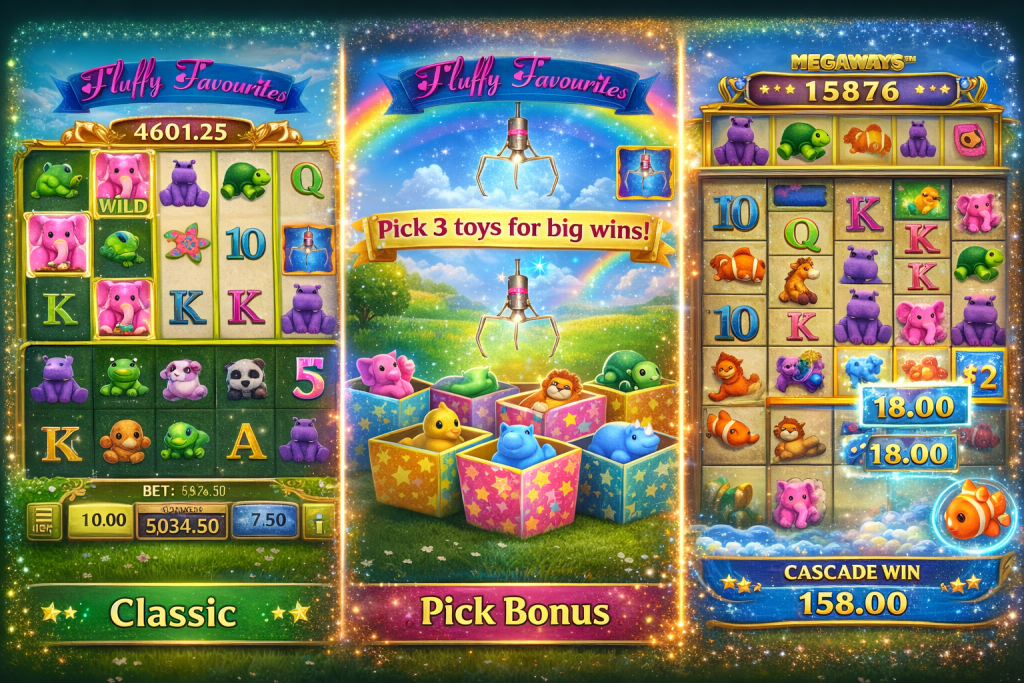
Another factor that strongly reinforces the belief in hidden tricks is the variation that exists across different Fluffy Favourites titles. Although the branding remains consistent, the behavioural experience can change substantially depending on which version a player is engaging with.
Some versions are built around relatively straightforward base gameplay, where wins are small and frequent but features remain central to overall value. Others rely heavily on pick-style bonuses, collection mechanics, or multi-stage features that compress volatility into short, intense moments. Megaways variants introduce an additional layer of perceived activity by constantly changing reel configurations, even when outcomes remain modest.
From the player’s perspective, these differences often feel like mood swings rather than mechanical shifts. One version appears lively and engaging, another feels slow and unrewarding, despite sharing the same characters and visual language. When players do not consciously separate these experiences, they assume the difference must be situational rather than structural.
This is where misconceptions take hold. A player who has experienced an engaging session on one version may expect similar behaviour from another. When that expectation is not met, the search for an explanation begins. Timing, stake size, and session length become focal points, not because they matter, but because they are visible variables in an otherwise opaque system.
In reality, the most influential variable is the version itself. Each game is configured with its own balance between frequency and size of wins, feature emphasis, and pacing. These choices shape how a session feels over time, but they do not announce themselves clearly to the player. Instead, familiarity of theme masks difference of structure.
Recognising this landscape changes how Fluffy Favourites should be interpreted. What feels like inconsistency is often the result of moving between related but distinct products. Once this is understood, many of the behaviours that encourage hack-based thinking lose their power. The game no longer appears to be withholding something; it is simply operating according to a design the player has not yet separated from its branding.
This insight is crucial, because it redirects attention away from imagined shortcuts and towards a clearer understanding of how perception is shaped by continuity, variation, and expectation.
Core Mechanics and the Gap Between Perception and Reality
core mechanics
How structure turns into perceived value
Tap a layer to reveal what it changes in the player’s experience. The maths stays underneath; interpretation builds above it.
Perception gap
The base game stays constant. The feeling changes because meaning is added above it through feedback and feature focus.
To understand why Fluffy Favourites so often feels exploitable, it is necessary to look calmly at how its core mechanics function and, more importantly, how those mechanics are experienced by the player. The gap between these two layers is where most misconceptions are formed.
At a mechanical level, the base game in Fluffy Favourites is deliberately unspectacular. Most spins are designed to produce either no win or very small returns. This is not a flaw or a hidden trick; it is a structural choice. The base game exists primarily as a delivery system for anticipation. Its role is to maintain engagement long enough for feature triggers to feel meaningful when they arrive.
Because of this, players often misread the base game. Frequent low-value wins, paired with animated reactions and sound cues, create a sense of activity that is not matched by actual progress. The game feels busy, even when it is not rewarding. This mismatch leads players to assume that something is building beneath the surface, when in reality each spin remains independent of the last.
Bonus features sit at the centre of perceived value in the Fluffy Favourites series. Whether through pick-style mechanics, collection features, or larger win windows, these moments concentrate most of the volatility into short periods of heightened attention. From a behavioural standpoint, this creates a strong contrast effect. Long stretches of relative emptiness make even modest bonuses feel significant, reinforcing the belief that reaching the feature is the real objective of play.
Visual design amplifies this effect. Bonus symbols are animated to stand out. They arrive with sound cues, pauses, and framing that suggest importance. Near-miss outcomes are presented with just enough emphasis to feel meaningful, without ever implying certainty. None of this alters probability, but all of it alters interpretation. Players begin to feel that the game is communicating with them, hinting at what might come next.
This is where the idea of a hack quietly takes shape. If the game appears to respond, to hesitate, or to escalate, it feels logical to assume that behaviour can be influenced. In reality, the system is static. What changes is the player’s emotional state. Attention narrows, memory becomes selective, and moments of excitement are weighted more heavily than long periods of inactivity.
Understanding the mechanics in isolation is not enough. The key insight lies in recognising how little of the experience is driven by calculation, and how much is driven by interpretation. Fluffy Favourites does not hide opportunities; it highlights moments. The difference between those two concepts is critical.
Session Flow, Perceived Phases, and the Illusion of Momentum
Session flow
A typical session, from entry to exit
This is not a prediction tool. It is a perception map: why a session can feel like it is “building”, and why stopping can feel wrong even when nothing is owed.
You arrive with a target in mind: “see a bonus”, “get a run”, “feel momentum”.
Most spins are informationally quiet: small wins, no feature, nothing that confirms a narrative.
Near-features and “almost” moments increase attention and make the session feel like it is forming.
A short window where attention and perceived value feel concentrated.
The moment the “build” stops feeling worth it, or fatigue wins.
Entry
Entry is where intention is formed. The session already has a goal in the player’s mind, which shapes how later cues are interpreted.
Over time, many players report that Fluffy Favourites sessions seem to follow recognisable phases. A session may begin slowly, then appear to warm up, before either delivering a bonus or collapsing into unproductive play. These perceived phases are one of the strongest contributors to hack-based thinking, because they feel experiential rather than theoretical.
From the player’s perspective, a typical session often unfolds in a familiar pattern. Early spins establish the tone, producing small wins or frequent symbol activity. This is followed by a period of heightened anticipation, where bonus symbols appear more often or animations feel more pronounced. At this point, stopping feels premature. The game appears engaged, and disengaging feels like walking away just before something happens.
If a feature triggers, the session feels validated. The narrative makes sense in retrospect. If it does not, frustration replaces anticipation, and players are left wondering whether they misjudged the moment. In both cases, the session is interpreted as a coherent story rather than a collection of independent events.
This interpretation is deeply human. The mind is predisposed to search for structure, especially in environments that provide repeated visual cues and partial reinforcement. Fluffy Favourites excels at creating these conditions. By repeating familiar animations and symbol behaviours, it encourages players to group spins into meaningful clusters, even when no such clustering exists mathematically.
Momentum is a particularly powerful illusion in this context. When symbols land in visually engaging ways, or when bonuses tease repeatedly, players feel that the game is moving somewhere. Momentum suggests direction, and direction implies predictability. Once that belief forms, stopping feels counterintuitive, as though interrupting a process that has already begun.
In reality, there is no momentum in the mechanical sense. The system does not accelerate, cool down, or prepare outcomes. What changes is the player’s level of emotional investment. As attention increases, so does sensitivity to cues, and the game begins to feel more active than it actually is.
This is not a design accident. Modern slot games are carefully structured to support long-form engagement without offering explicit signals that would reveal randomness too clearly. The result is an experience that feels segmented into phases, even though each spin remains isolated.
Recognising this illusion does not make the game less engaging, but it does change how it is interpreted. Once players understand that perceived session phases are psychological rather than mechanical, the appeal of finding the “right moment” to play diminishes. The game stops feeling like a process to be timed and starts to resemble what it truly is: a sequence of independent events framed as a continuous experience.
This shift in perspective is often enough to dissolve the belief that a hack exists at all.
Translating the Idea of a “Hack” into Something Realistic
hack translation
Translate “hack” into something that actually helps
This is not about breaking a game. It is about converting a common search term into safer, usable decisions and clearer expectations.
What people expect
high-risk ideasTiming advantage
“right moment”A belief that there is a best time to press spin.
Stake trigger
“magic bet”A belief that one stake level unlocks better behaviour.
Hidden mode
“hot slot”A belief the game enters a generous state that can be caught.
External tool
“cheat app”A belief a download can override outcomes.
What actually helps
usable decisionsSession limits
stopping logicDecide in advance when the session stops being worth attention.
Stake discipline
risk controlPick a stake for comfort, not to “trigger” anything.
Myth removal
clear signalsTreat teases as UX, not as evidence that a bonus is due.
Scam avoidance
safetyIgnore “hack tools” and protect accounts and devices.
Timing advantage → Session limits
The safe translation of “right moment” is not timing the game — it is timing your own session boundaries.
At this stage of the analysis, it becomes clear that the word “hack” is being used to describe something that does not exist in a technical sense, but does exist psychologically. Players are not searching for illegal access or hidden code. They are searching for a way to reduce uncertainty and regain a sense of agency within a system that feels emotionally demanding.
It is therefore useful to translate the idea of a hack into more realistic terms. What players usually want is not to beat the game, but to avoid being misled by it. They want to know how to recognise when a session is no longer productive, how to avoid chasing imagined opportunities, and how to engage with the game on clearer terms.
What definitely does not exist are shortcuts that alter outcomes. There are no stake-based triggers, no optimal timing windows, and no behavioural inputs that influence future spins. Any framework that promises otherwise misunderstands how these games are constructed and regulated. Believing in such ideas does not increase control; it increases vulnerability.
What does exist is the ability to interpret the experience more accurately. Players can recognise when they are responding to anticipation rather than evidence. They can identify when visual stimulation is replacing meaningful feedback. They can notice when engagement is being sustained by familiarity rather than value.
From a behavioural standpoint, this form of awareness is the closest equivalent to what players describe as a hack. It does not change results, but it changes decisions. It encourages players to judge sessions by outcomes rather than by how active or exciting they feel. It also helps separate emotional investment from rational evaluation.
A realistic interpretation of a “hack” therefore involves restraint rather than intervention. It involves knowing when to disengage, understanding that near-misses carry no informational value, and accepting that comfort and momentum are design features rather than signals. This perspective does not promise better winnings, but it does offer protection against the most common sources of frustration and loss.
In that sense, the only meaningful advantage available to the player lies in clarity. Once clarity replaces illusion, the game loses its ability to suggest that something is being missed.
Common Mistakes That Reinforce the Illusion of Exploitability
Common mistakes
Four patterns that quietly drain a session
A quick self-check. If one of these is happening, you are no longer playing the slot — you are reacting to it.
Treating “almost” moments as progress, then extending play to finish a story the game never promised.
Increasing stake after teases or quiet streaks, as if intensity can influence what happens next.
Playing without a stopping rule, letting the session length be decided by mood rather than intention.
Continuing when focus has dropped. At that point, you are most likely to accept myths and chase meaning.
If you recognise two or more items at once, treat that as the strongest signal on the page: it is time to pause, not to “push through”.
Certain patterns of behaviour appear repeatedly among players who believe that Fluffy Favourites can be hacked or figured out. These behaviours do not arise from ignorance, but from understandable attempts to impose structure on an experience that resists it.
One of the most common mistakes is chasing after repeated bonus teases. When bonus symbols appear frequently without triggering a feature, players often interpret this as progress. In reality, these near-misses have no predictive value. Treating them as indicators encourages longer sessions driven by anticipation rather than outcome.
Another frequent error is altering stake size in response to perceived momentum. Players may increase stakes after a series of active spins or reduce them during quieter periods, assuming that the game’s behaviour is responding to their actions. This behaviour is emotionally logical, but mechanically irrelevant. Stake changes affect potential payout size, not probability.
Long, unstructured sessions also contribute to false pattern recognition. As session length increases, selective memory becomes more influential. Wins and near-wins are remembered vividly, while uneventful stretches fade into the background. Over time, this distortion creates the impression that meaningful moments are clustering, even when they are statistically scattered.
Players also tend to overvalue familiarity. Returning to a game that feels comfortable can be reassuring, but it can also reduce critical distance. When symbols, sounds, and animations feel known, players are more likely to interpret engagement as understanding. This familiarity can make it harder to recognise when decisions are being guided by emotion rather than evidence.
Finally, many players underestimate the impact of fatigue. As sessions extend, attention narrows and judgement becomes more reactive. At this point, the desire for a hack intensifies, because frustration demands explanation. Unfortunately, this is also the moment when players are most likely to accept flawed reasoning or misleading external claims.
Recognising these mistakes is not about avoiding enjoyment. It is about separating enjoyment from interpretation. When players understand how easily perception can drift away from reality, the idea that the game is hiding something becomes far less convincing. The belief in exploitability fades, replaced by a clearer, more stable understanding of what the experience truly represents.
Myth Versus Reality: Breaking Down Persistent Beliefs
myth vs reality
Small myths, big decisions
Tap to expand. One opens at a time, so the page stays compact and readable.
Reality
Streaks happen in random systems. They do not indicate a state you can catch or maintain.
Use your limits as the signal — not “heat”.
Reality
Probability does not accumulate. A long dry stretch does not make a feature more likely.
If you hear “due”, you’re usually chasing, not reading information.
Reality
Near-misses are presentation, not evidence. They don’t increase future likelihood.
Treat near-misses as noise — then watch how they push you to continue.
Reality
Stake affects payout size, not trigger probability. What changes is emotional intensity.
Pick a sustainable stake and keep it consistent.
By the time players reach the stage of actively searching for hacks, a set of recurring beliefs has usually already taken hold. These beliefs feel intuitive because they align with lived experience, yet they do not reflect how the system actually operates. Addressing them directly is essential, not to correct players, but to remove the false logic that sustains frustration.
One of the most common myths is the idea of a “hot” or “cold” slot. Players often feel that Fluffy Favourites enters periods of generosity or restraint. This belief is reinforced by short-term clustering of wins or bonuses, which the human mind is naturally inclined to interpret as trends. In reality, no such states exist. Each spin is generated independently, without reference to previous outcomes. Apparent streaks are products of perception, not internal modes.
Another persistent belief is that bonuses become “due” after long dry spells. This idea feels particularly convincing in games where bonus symbols appear frequently without triggering features. The logic suggests balance or compensation, as though the system must eventually correct itself. In practice, no such correction occurs. Probability does not accumulate, and absence does not increase future likelihood.
Timing-based myths are also common. Players may believe that playing at certain times of day, after specific events, or for a particular duration influences results. These beliefs often arise because timing is one of the few controllable variables in an otherwise opaque system. Unfortunately, it has no mechanical relevance. The system does not recognise time, session length, or player history.
Stake-related myths follow a similar pattern. The belief that certain stake levels trigger better behaviour persists because higher stakes produce more emotionally salient outcomes. When a bonus is hit at a higher stake, the result feels more meaningful, reinforcing the illusion that the stake caused the event. In reality, stake size affects payout magnitude, not trigger probability.
The common thread running through these myths is the search for narrative coherence. Humans prefer systems that make sense over systems that are random. Fluffy Favourites, through its design, provides enough structure to support narratives without ever confirming them. Understanding this distinction does not remove enjoyment, but it does remove misplaced confidence.
Once myths are recognised as interpretative shortcuts rather than insights, the need to find hacks diminishes significantly. The game stops feeling deceptive and starts feeling predictable in a different way: predictable in how it shapes perception, not in how it delivers outcomes.
Fake Hacks, Cheat Claims, and Why They Target Frustrated Players
The final stage of hack-related thinking often extends beyond the game itself and into external promises. When frustration builds and internal explanations fail, players become more receptive to third-party claims offering certainty. This is where fake hacks and cheat software enter the picture.
These claims follow a familiar pattern. They present themselves as solutions discovered through insider knowledge, reverse engineering, or hidden access. They often promise guaranteed bonuses, controlled outcomes, or systems that bypass randomness entirely. Their language mirrors the player’s frustration, positioning the product as a way to reclaim fairness.
From a psychological standpoint, this targeting is highly strategic. Players who feel that a game is withholding something are primed to believe that someone else has found the missing piece. The more emotionally invested a player becomes, the more appealing certainty appears, even when it contradicts basic logic.
In practical terms, such claims offer nothing of value. Modern slot systems cannot be overridden by external software or user manipulation. Any tool claiming to do so is either ineffective, deceptive, or actively harmful. The risks extend beyond wasted time or money and can include compromised accounts, data theft, or device security issues.
More importantly, reliance on external hacks reinforces the original misunderstanding. It shifts responsibility away from interpretation and towards imagined control. Instead of clarifying how the game works, it deepens confusion and prolongs engagement driven by false hope.
The most effective protection against these claims is understanding. When players recognise why the game feels exploitable, and why that feeling does not correspond to reality, external promises lose their appeal. The game no longer appears to be hiding something, and therefore there is nothing for a hack to reveal.
In this sense, clarity is not just informative; it is protective. It shields players from both internal misconceptions and external exploitation, replacing uncertainty with a grounded understanding of how the experience is constructed and why it feels the way it does.
Frequently Asked Questions
Reality check
No. There is no technical hack, exploit, or hidden method that changes outcomes. Each spin is independent and governed by fixed random processes.
No. Probability does not build up. A dry spell is not progress and does not increase the chance of a feature on the next spin.
Yes, the theme can stay familiar while structure changes (lines, features, reel behaviour). That changes pacing and “session feel”, even if the branding looks similar.
Stake changes the size of potential payouts, not the underlying outcome selection. Timing changes the player’s state, not the game’s state.
Why Understanding Matters More Than Any Hack
The enduring appeal of the phrase “Fluffy Favourites hack” reveals far more about human psychology than about the game itself. Players are not searching for illegal access or technical exploits; they are searching for certainty in an experience that feels emotionally structured but mathematically opaque. The belief that something can be uncovered, decoded, or timed arises because the game is designed to feel interpretable.
Fluffy Favourites presents a world that looks consistent, friendly, and familiar. This surface continuity encourages players to assume internal consistency as well. When outcomes fail to align with that assumption, the mind looks for hidden explanations rather than questioning the assumption itself. Hacks, cheats, and secret strategies become attractive not because they are plausible, but because they promise coherence.
What this analysis shows is that nothing is being concealed. The apparent patterns, phases, and moments of momentum are products of perception shaped by design. Visual repetition, near-miss effects, and structured anticipation create the impression of progress without ever altering probability. The game feels as though it is responding, when in reality it is simply repeating familiar cues.
Understanding Fluffy Favourites as a series rather than a single slot removes much of the confusion that fuels hack-based thinking. Different versions behave differently, not because of hidden modes, but because they are built differently. When players fail to separate branding from structure, inconsistency feels personal or mysterious. Once that separation is made, many supposed signals lose their meaning.
Equally important is recognising how session flow is experienced. Players often interpret engagement as momentum and anticipation as proximity to reward. These interpretations are emotionally compelling, but they are not informational. The system does not warm up, cool down, or prepare outcomes. What changes over time is the player’s level of attention and investment, not the behaviour of the game.
The most harmful consequence of believing in hacks is not disappointment, but misdirection. It shifts focus away from understanding and towards imagined control. This makes players more vulnerable to frustration, poor decisions, and external claims that exploit uncertainty. In contrast, understanding restores balance. It allows players to enjoy the game without attributing meaning where none exists.
There is no advantage in trying to outsmart Fluffy Favourites. The game cannot be tricked, negotiated with, or predicted. The only meaningful advantage lies in clarity: knowing what the game is designed to do, how it shapes perception, and where interpretation ends and randomness begins.
When that clarity is achieved, the idea of a hack becomes unnecessary. Nothing is missing, nothing is being withheld, and nothing needs to be unlocked. What remains is a game that can be engaged with on honest terms, without illusions of control and without the frustration that those illusions inevitably produce.